Is It Worth the Risk?: Different Cultural Takes on Risk Perception

Are some cultures greater risk-takers than others?

This study dove in to find out.

Analyzing the data of respondents from Germany, Poland, the US, and China, the study measured respondents’ risk preference for pricing financial options.

These are their findings.

Hypothesis

Studies have shown a correlation between a culture’s position on the individualism-collectivism scale and its risk preference.

Called the Cushion Hypothesis (Weber & Hsee, 1998), the theory suggests that those from collectivist cultures are more likely to take financial risks.

Why?

Due to the perceived support from their collectivist culture and, thus, the reduced negative consequences such a risk might have on the individual.

While this study did arrive at the same conclusion – that the collectivist society of China was less risk-averse than its American counterpart – it did identify a more specific reason for it.

Risk-Averse

The majority of respondents in all four cultures were identified as risk-averse (i.e. they were willing to pay more for options they saw as “less risky”).

When you look at a risk-return conceptualization, it is natural that most people, no matter what culture, would perceive risk this way.

When risk preference was evaluated in the traditional expected-utility framework, Chinese respondents were considerably less risk-averse in pricing than Americans.

But what this study found was that the difference in risk preference may not be due to a cultural attitude toward perceived risk; instead, it appears largely due to the perception of the financial options’ risk itself.

Chinese participants simply did not find the options as risky as their counterparts.

Conclusion

The study states:

“Chinese respondents were closest to risk neutrality in their pricing of the financial options and judged the risk of these options to be the lowest, but were not significantly less perceived-risk averse.

“American and Germans offered the lowest prices and also perceived the risk of the options to be highest, but were not significantly more perceived-risk averse.”

One might practically apply this knowledge to commerce and negotiation when working across these particular cultures, affording both negotiators joint gains.

The study concludes that while cultures do vary on a collectivism-individualism continuum which undoubtedly impacts perceived risk, other cultural factors in risky decision-making – locus of control, differences in achievement motivation, etc. – may also come into play in risk preference.

Further studies into the subject might provide more insight.

Church of Diego Maradona: How One Culture Made a Footballer a God

His nickname in Argentina is “El Dios” – or “The God.” 

Both a play on his jersey number, 10 (“El Diez”), and a nod to the way Argentines viewed Maradona: as a god on the field, masterful in his footwork.

He took Argentina to victory over Mexico in the 1986 World Cup.

One of his shots in that tournament is considered the “goal of the century.”

So how does a football player go from being drafted to becoming a worshipped deity?

This is Diego Maradona’s rise to glory.

Rise of Maradona, “The Golden Boy”

Plucked from obscurity, Maradona rose to become a hero of the lower classes of Argentina.

Before long, he became the youngest Argentine to debut on the national team at 16 years old.

His mastery lay in his control over the ball and his ability to score and create opportunities for team members to score as well.

At 5’5”, his low center of gravity helped him maneuver and perform better than most, though his real value was his presence and leadership on the field.

He soon was deemed “El Pibe de Oro” – or “The Golden Boy.”

The 1986 World Cup win in the quarterfinal against England involved one goal that is now referred to as the “Hand of God.”

This is because, though the referee believed the goal was struck with his head, it was actually scored with Maradona’s hand.

Though he struggled with addiction which led to some controversy, he is regularly considered one of the top players (if not the top) of the 20th century.

Church of Diego Maradona

The fanaticism of Maradona in Argentina led to the creation of a parody church in his name.

The Church of Maradona was founded in 1998 on Maradona’s 38th birthday in Rosario, Argentina, by three of his fans.

Christmas is celebrated on Maradona’s birthday in October, and other memorable dates in Maradona’s life (including that “Hand of God” goal) are marked as holidays by the church as well.

One of its founders, Alejandro Verón, is quoted as saying:

“I have a rational religion and that’s the Catholic Church and I have a religion passed on my heart and passion and that’s Diego Maradona.”

Maradona’s birth in 1960 begins the world, with every year after designated d.D. (‘después de Diego’ in Spanish, or ‘after Diego’).

There are even ten commandments in the religion, the first of which is, “The ball is never soiled,” and the second, “Love football above all else.”

They thereafter become more Diego-focused, with the last commandment being, “Name your first son ‘Diego’.”

According to the Wall Street Journal, followers of the Church of Diego have spread to Mexico and Brazil and as far as Italy and Spain.

This lines up, as Maradona led club teams to the gold in Spain and Italy.

The idol worship is real and so are the church’s rituals, but its worshippers view their church as all in good fun.

Still, this level of fanaticism raises the question: how did Maradona capture the imaginations of Argentine society?

“The Golden Boy” passed away in 2020, at the age of 60, from cardiac arrest.

After his death, Buenos Aires University cultural professor, Pablo Alabarces, said of Maradona

“In our collective imagination Diego Maradona represents a certain glorious past, he’s a symbol of what we might have been.”

Is this how? Is he a symbol of Argentina’s glorious past?

Whatever the case, he was mourned by many, and his legend and death were memorialized not only in Argentina but across the globe.

History of the World Cup: How the Game Became Ingrained in World Culture

The World Cup, the most-watched sporting event in the world, draws billions of viewers.

More than half of the global population tunes into the World Cup final.

How did this sporting event capture the imaginations of the international community?

It all began with the Olympic Games.

The End & The Beginning

After debuting at the 1900 Olympics in Paris, football was dropped from the Olympics’ program in 1932, after a dispute between FIFA and the International Olympic Committee.

The FIFA committee decided to put on their own global event and chose Uruguay as the World Cup’s first host, after the nation won back-to-back gold medals at the 1924 and 1928 Olympics.

This put a crunch on European teams, as Europe was experiencing a depression, and many players did not want to risk losing their jobs (unlike today, players weren’t awarded hundreds of thousands+ then) to attend the tournament.

This resulted in many favored European teams (England, Spain, Italy, Germany, Holland, etc.) opting out of the world’s first-ever World Cup.

To appeal to European teams to participate, Uruguay offered to assist in travel expenses, which drew France, Belgium, Yugoslavia, and Romania.

Some leaders seemed to know that this was the beginning of something big.

Romanian King Carol, for example, provided players (whom he chose personally) a three-month vacation from their work and guaranteed employment upon their return.

With the roster set, the 1930 World Cup kicked off in Montevideo on July 13.

Yesterday & Today

In 2018, more than half of the global population – some 3.57 billion viewers – watched the World Cup final.

The first world cup final was viewed by 93,000 spectators.

93,000 football fans watched the competition’s two favorites, Uruguay and Argentina, battle it out to a 4–2 win for the host country.

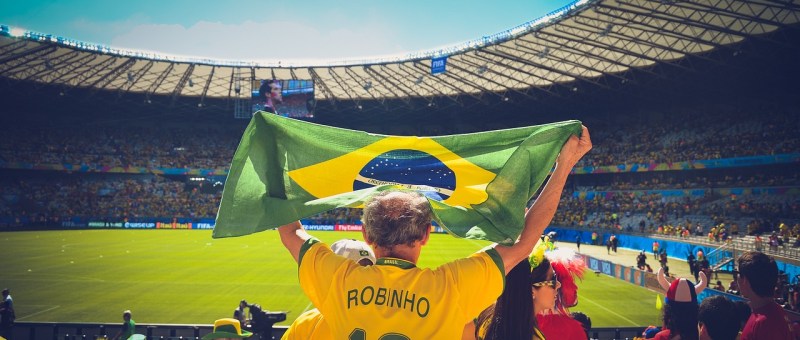
Today, five-time World Cup winner, Brazil, is favored to win the 2022 World Cup.

But the games are not yet over…

Emotion Words: How Different Languages Express Feelings

Does the emotion word for happiness mean the same thing in all languages?

How about grief? Angst?

A scientific study looked at the semantic patterns in some 2,500 languages and discovered that emotion words may mean different things according to the language family from which they originate.

We’ve talked about emotion and culture over the past few weeks: how emotions are perceived differently and expressed differently.

Now, we learn that even the language of emotion is diverse.

Let’s take a look.

Universal Emotions

Some emotions, which English speakers might consider primary emotions – think happiness, sadness, anger, love, hate, etc. – are quite universal across world languages.

Most languages have words to describe the primary feelings shared by all humans.

However, just as cultures see color differently, even these primary emotions may be nuanced.

The primary emotion of anger blends into other feelings in different cultures.

Indo-European languages link anger to anxiety, while Austroasiatic languages link it to regret or grief.

Austronesian languages connect anger to pride and hate, while Nakh-Daghestanian languages connect it to envy.

This seems to indicate that cultures see even primary emotions in different shades.

But where culture and emotion become even more interesting is in the specificity of the language surrounding it.

German Specificity 

Some languages, like German, have words expressing very specific feelings for which other languages have no equivalent vocabulary.

“Sehnsucht,” for instance, means to yearn deeply for another life, while “schadenfreude” means to feel pleasure from another’s misfortune.

There are no direct translations in English, and the nuance would be lost in describing these feelings in pretty much any other language but German.

You might consider that these feelings, therefore, are deeply rooted in German culture.

Papua Guinea’s Hospitality

The word, “awumbuk,” is another example of a feeling expressed with language that is deeply rooted in culture.

This word comes from the Baining people of Papua Guinea.

It expresses the feeling felt after guests leave following an overnight stay.

According to cognitive scientist, Asifa Majid, it describes a feeling of listlessness, like a “social hangover.”

The different experiences of emotion across cultures are emphasized in language.

As the study’s senior author, psychologist and neuroscientist, Kristen Lindquist, put it,

“We walk around assuming that everyone else’s experience is the same as ours because we name it with the same word, and this suggests that that might not be the case.”

“Are You Angry?” How One Can Identify Norm Violations Through Emotional Expression

A group is completing a task.

Each participant takes a turn doing the task. Most do it the same way, but then one does it completely differently.

When this individual steps out of place, the others look at him angrily.

If you observed this, what would you deduce?

What would you think if the others didn’t look angry but appeared sad instead?

This is the scenario put forth by the study we’ll be discussing in this post.

Over the past few weeks, we’ve talked about societal emotional environments and cultural emotional arousal levels.

As a foreigner in a new country, how do you adapt your behavior so that you don’t have a monkey moment in another culture?

Often, you can read into others’ emotional expressions which may indicate to you whether you’ve upset a social norm.

The Study

This study takes a look at observations of norm violations using four countries – Germany, Greece, Israel, and the US – each of which has different rules and norms for negative emotions.

Each group observed the two interactions described above.

In general, the anger shown suggested to the observers that if you want to be part of a group, you should complete the task the same way as the others (see, norms).

However, when the observers saw sad reactions instead, they weren’t universally sure how the participant should have behaved in this social context.

Anger vs. Sadness

Anger is generally a strong signal about societal norms and behaviors.

Anger suggests a behavior that’s both undesirable and incongruent to the emoter’s norms.

Sadness, however, though it may indicate unpleasantness or goal obstruction, does not necessarily emphasize a norm violation.

Performance of All Groups

For all four groups, anger was more indicative of a norm violation than expressions of sadness or neutrality.

Greek participants were better at perceiving sadness as a sign of a norm violation, while German participants were most prone to perceive anger.

American participants were most likely to consider the expressers indifferent.

Israeli participants differentiated best amongst the three expressions…although that may be because the study was Israeli-created (and so, the expressions were too).

The study also found that participants were more likely to recognize the norm and see the violation if anger was the expression shown.

This suggests that different cultures are more perceptively sensitive to different emotions and that anger is more pointed in making one note a norm violation.

Expressing Emotions in Culture: Do More Emotive Cultures Experience Greater Life Satisfaction?

Does expressing positive emotions make a person happier?

Does a society that embraces expression breed a population that’s more content?

Before you answer, let’s look at this forty-nine-country study on societal emotional environments and cultural differences in life satisfaction and well-being.

Societal Emotional Environments

First off, what is a societal emotional environment?

The paper defines it as

“the emotional climate of a society (operationalized as the degree to which positive and negative emotions are expressed in a society).”

In other words, our individual “emotional environment” is influenced by the emotions those around us express

This, in turn, influences our well-being.

The study looks at the intrapersonal, interpersonal, and extrapersonal effects of emotion expression.

  • Intrapersonal – the well-being of those who express the emotions
  • Interpersonal – the quality of interactions with others for those who express emotions
  • Extrapersonal – the well-being of those around the expresser as a result of their expression

Emotion Valuation

Not only do different cultures express emotions differently, but they value them differently too.

Particularly when it comes to intensity of emotion.

Latin American cultures, for example, tend toward high arousal positive emotions, like joy and excitement, and these are shared often, intensely, and openly.

Confucian Asian cultures, on the other hand, value low arousal positive emotions, like calm and serenity, and therefore will more often suppress expressive emotions.

The Study’s Results

While identifying the average PSEE (positive societal emotional environment) and the NSEE (negative societal emotional environment) of each society surveyed, the study evaluates the participants’ life satisfaction and well-being.

Participants self-reported the frequency of positive and negative emotional expressions.

The study found that all countries expressed positive emotions more frequently than negative emotions, some more so than others.

Italy, El Salvador, and Ghana were countries with the highest PSEE scores, expressing positive emotions “a couple of times a day,” while Japan, Hong Kong, and the United Kingdom had the lowest PSEE scores, expressing positive emotions “a couple of times a week.”

High PSEE country scores were in the regions of Latin America, Germanic Europe, Nordic Europe, Latin Europe, Sub-Saharan Africa, and the Middle East, while low PSEE scores occurred in the Anglo region, as well as Southern Asia and Confucian Asia.

Negative emotions were expressed frequently in countries like Guatemala, Bhutan, and Pakistan, averaging “a couple of times a week,” while those countries with the lowest scores – Switzerland, Norway, and Iceland – expressed them “a couple of times a month.”

The study found that societies with high NSEE scores reported lower life satisfaction on the whole (although individuals were often independently more satisfied), while societies with high PSEE scores reported higher life satisfaction but not significantly.

This seems to indicate that having negativity vocalized around you affects your life satisfaction to a greater extent than having positivity vocalized around you.

Next week, we’ll take a further look at emotions in culture.

Culture and Self: How Self-Esteem is Based on the Fulfillment of Dominant Cultural Values 

Does one’s culture influence self-regard?

This article by CNRS (Délégation Paris Michel-Ange) suggests that it actually informs it.

How?

Everyone bases their success or level of achievement on the dominant values of their culture.

Even if a person’s personal values differ from the norm, their self-esteem is often based on fulfilling cultural values.

Let’s see why.

The Survey

Fulfilling one’s personal values has long been viewed in psychology as the greatest influence on self-esteem.

But that may not be the case.

A global study, conducted by social psychologist, Maja Becker, at the CLLE (Laboratoire Cognition, Langue, Langages, Ergonomie) department of the Université de Toulouse II-Le Mirail, surveyed 5,000 teenagers and young adults from 19 different countries.

200 young people from countries in Eastern and Western Europe, South America, Asia, Africa, and the Middle East took part.

Questions in the survey covered personal and cultural values and to what degree they impacted the students’ self-esteem.

Key Factors of Cultural Influence

What the survey found was that four key factors drove self-esteem in all cultures:

  • Earning social status
  • Fulfilling one’s duty
  • Controlling one’s life
  • Benefitting others

The study also found that the students’ own personal values had little to do with their level of self-esteem.

Rather, self-esteem is measured against our ability to fulfill dominant cultural values.

Fulfillment of Values = Self-Esteem

Each culture places different degrees of importance on these four factors.

For instance, those from Middle Eastern, African, or Asian cultures that value tradition and conformity might place more importance on doing one’s duty and benefitting others.

Thus, individuals in such cultures derive their self-esteem from demonstrating this fulfillment of duties.

And those from Western cultures whose values lie in individualism and freedom might place more importance on controlling one’s life.

Thus, individuals in such cultures derive their self-esteem from demonstrating such control.

Even if one doesn’t personally subscribe to their own culture’s values, they are still influenced by them on a deeply personal level.

Subtly, societal expectations can make or break an individual’s psyche and self-worth.

Next week, we’ll discuss how a culture’s time perspective might also influence self-esteem.

Workplace Organizational Structures: The Pros & Cons of Hierarchical, Flat, and Functional Workplaces

Over the past few weeks, we’ve discussed how to build the best global virtual team, the challenges of working virtually and cross-culturally, and how to best manage such a team.

One of the cross-cultural challenges discussed was differences in norms regarding organizational structures in the workplace.

Some cultures prefer a hierarchical structure with a clear chain of command. Others prefer a flat structure, which is often more collaborative.

Over the next couple of posts, we’ll discuss various organizational structures.

Knowing about these structures as a manager will help you understand how others might be accustomed to working.

Hierarchical Structure

The hierarchical structure is probably the most common organizational structure in a workplace.

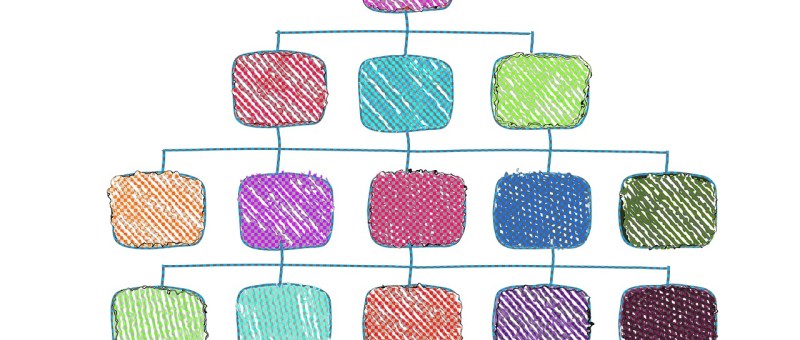
It has a clear and direct chain of command, with a senior manager at the top, followed by various departmental executives, followed by supervisors/team leads, all the way down to general employees.

Those at the highest level – the CEO, for instance – have the final say in decisions.

The CEO’s decisions may, however, require approval by a board of directors.

Each structure has its pros and cons.

Hierarchical pros:

  • Provides clear career paths
  • Offers a clear chain of command, thus reducing conflict
  • Helps businesses streamline processes
  • Leaves little room for dissent from those low on the chain (which can be good or bad, depending on how you look at it)

Hierarchical cons:

  • May negatively impact employee morale
  • Can slow decision-making processes, as approval is needed
  • May stunt innovation and creativity, as fewer are allowed the power to make decisions

Flat Organization Structure

Small businesses and startups typically use a flat organizational structure.

They must often adjust to a stabler structure once they move past the startup stage.

As you may have guessed, this structure is much less hierarchical with fewer middle managers between the lower-level employees and top dogs.

Flat pros:

  • Less supervision required
  • More responsibility given to employees
  • Trust and open communication
  • Greater employee involvement and ease of coordination

Flat cons:

  • Potential for more conflict and confusion
  • Sometimes slows decision-making processes, as people cannot agree
  • May stunt specified skills or knowledge

Functional Structure

A functional structure involves departments made up of specialized work functions, each with a designated and experienced leader.

The decision-making process is generally centralized in this type of organization, with department heads reporting to upper management.

The team leads communicate with each other to coordinate, and the team members below them typically have little involvement with that process.

Functional pros:

  • Employees focus on specialized tasks
  • Each department fosters teamwork toward a joint goal
  • Is scalable no matter the size of the business

Functional cons:

  • Coordination can be lacking
  • Big picture context is lost on lower-level employees
  • Company processes and strategies can become confused

As you can see, each organizational structure strong and weak points.

The type of structure you choose should be best suited to the business you’re running.

Without a strong structure that supports your business and the type of work culture you wish to promote, you will face difficulties in productivity, coordination, communication, and overall morale.

Next week, we’ll talk about four additional workplace organizational structures.

The Team Itself: Management Challenges Faced By Global Virtual Team Leads

Have you ever dealt with a colleague who has a very different work style than you?

Or one who is driven by different motivations?

How did you resolve these conflicts in approach and perspective?

Whatever skills you’ve used to confront any collaborative issues you’ve had with your colleagues are likely to pay off in a global virtual team environment.

As we’ve discussed over the past two weeks, cross-cultural remote teams come with their own unique challenges.

Some of them are familiar; some are completely foreign.

I’ve outlined a few below.

Motivating Factors

While we are all motivated by different things – be it money, accolades, achievement, etc. – culture often factors into our motivations.

That’s because different cultures have different values

And values are what often drive motivation.

Some cultures emphasize tangible things; thus, bonuses or other such benefits would be motivators for these team members.

Other cultures value work/life balance, so job satisfaction and time off might be a motivating factor in this case.

Knowing where your team members come from and what they value will help you motivate each member in an individualized way.

Work Style

Often, different work styles are common amongst different cultures.

This often has to do with how the culture views workplace hierarchies.

Are your team members from a culture that demands a strict hierarchy and a top-down approach to management?

Or are they from a culture with a flatter more egalitarian team approach?

On a cross-cultural team, members will have different managerial needs due to their backgrounds, so understanding their work style – whether they need more hands-on or hands-off guidance – will help you better lead them.

Information Gaps

Information gaps on a global virtual team can impact everything from data flows to communication to processing.

Giving all team members access to the right resources for your project goals will ensure that no one falls through the gap.

Doing so will also improve collaboration, as everyone will be working with the same information.

These are just a few challenges that managers face while working with global virtual teams, specifically in a cross-cultural context.

Next week, we’ll talk about challenges that have to do with the virtual environment itself.

Tranquilo, Maktoob, and Hakuna Matata: Words to Live by in Different Cultures

Each culture perceives the meaning of life differently.

This can come across in its turns of phrase.

Last week, we discussed a cross-cultural study about well-being and how the term isn’t universal.

Like many complex terms, well-being means different things to different cultures, based on each culture’s values.

Today, I’d like to take a look at how our language – or our turns of phrase – often exemplify our cultural values.

Tranquilo in Colombia

“Tranquilo” – or “relax” – is a bit of a mantra in Colombia.

In a Washington Post article, James Bargent describes it as:

“a refrain which can drive you into an impotent rage, or it can remind you that life’s troubles are rarely terminal.”

Often ranking as one of the happiest nations in the world, Colombians generally live by this maxim, which may partially be based upon the uncertainty of life in the country.

If you don’t build up great expectations, you don’t become upset when your plans are upset.

Instead, the culture wraps itself up in family and friends and appreciates life slowly at its own pace.

Maktoob in Arabic Cultures

Meaning “that which is written,” maktoob translates to destiny or fate.

In Arabic culture, when something goes right or wrong, you might be told with a shrug that it is “maktoob.”

With our destiny already pre-determined by God, things happen to us and are out of our hands.

This external locus of control allows Arabic cultures to attribute both their successes and struggles in life to God’s will.

Such a perspective can give one comfort that everything that happens was meant to happen.

Hakuna Matata

What a wonderful phrase.

You may know it from Disney’s The Lion King, but the phrase, “hakuna matata,” was taken from Swahili culture.

It roughly translates to “there are no troubles.”

The phrase is often used as a response to a greeting or as a condolence.

“Hakuna matata” highlights the laidback attitude of Swahili culture but also its emphasis on personal and societal well-being.

These three turns of phrase show us a deeper aspect of each culture and where their values lie.

Can you think of a phrase in your own language that exemplifies your culture?