The Meaning of Well-Being: A Qualitative Cross-Cultural Study

What does “well-being” mean to you?

Back in 1984, the World Health Organization defined health and well-being as follows:

“Health is a state of complete physical, mental, and social well-being.”

This universal definition of well-being differs from subjective well-being, which is how one evaluates one’s own quality of life, how one feels in it, and how one feels they function in it.

Research and literature surrounding subjective well-being focus on happiness, positive affect, and life satisfaction.

Social well-being is more in tune with social behaviors: how one interacts with social institutions and mores, how he/she interacts with others, and how others react to him/her.

Considering these differences, this study comparing well-being constructs between German and Chinese students looked at social support as an indicator of social well-being, and happiness and satisfaction with life as indicators of subjective well-being.

Well-Being Study

It can be assumed that the definitions of the above terms might differ between these two groups, based on their differing cultures, as might the objectives to accomplish each.

Via focus groups and questionnaires, the study assessed perceived social support through rated statements like:

  • “I experience a lot of understanding and security from others.”
  • “If necessary, I can easily borrow something I might need from neighbors or friends.”
  • “I have friends and family who will simply just hug me.”

Similarly, satisfaction was measured through statements like:

  • “The conditions of my life are excellent.”
  • “In most ways, my life is close to my ideal.” 
  • “I am satisfied with my life.”

And, lastly, happiness was measured via statements like:

  • “Some people are generally happy. They enjoy life regardless of what is going on, getting the most out of everything.”
  • “Some people are generally not very happy. Although they are not depressed, they never seem as happy as they might be.”

The Results

Happiness

Both groups defined happiness criteria as including social contacts, positive emotions, and quality of life. Where the two countries differed was in social contact.

Social contact was the most frequently mentioned aspect in China and the least in Germany.

Another interesting aspect of the way each group viewed happiness was in the angle they took. 

The Chinese groups saw happiness as pursuing a dream/goal and/or seeing it fulfilled, while the German groups saw two types of happiness: uncontrollable (which is designed by luck or fate, for instance) and controllable (as in achieving something). They also specified that happiness is subjective and brief.

Life Satisfaction

Both groups noted different kinds of satisfaction.

First, an individual realistic standard; second, an ideal standard that’s changeable. 

Lastly, they mentioned one’s perception of current satisfaction.

Quality of life was seen by both groups as a significant factor of life satisfaction, but the Chinese students focused on good living conditions (like high salary and economic conditions), while the German students focused on basic needs fulfillment (a home and food, etc.).

The researchers concluded that these differences may be based on the economic focuses of the two countries.

The Chinese groups saw contentment with one’s situation and a positive attitude about life as major contributing factors to life satisfaction, while the German students noted that satisfaction can come with comparing one’s current situation with the social norm or an individual standard.

Perceived Social Support

Chinese students focused on societal support, like charities, companies, and government policies, when discussing sources of perceived social support, while German students focused more on direct social networks.

German students mentioned financial and material support more frequently than their Chinese counterparts.

Both groups mentioned emotional support, while only the Chinese groups talked about “asking for help” indirectly, such as by posting on social media to gain empathy.

This study shows that though the themes of well-being may be universal, the contributing factors to well-being differ across cultures, often depending on cultural values, perspectives, and expectations.


Holistic vs. Analytic Thinking in Culture

How would you describe your living room?

Would you say it’s a space to commune with your family and entertain your friends? Would you describe it as a welcoming area to offer your guests food and drink?

Or would you list its working parts? Would you explain that it has two sofas, a coffee table, an entertainment center, and a 65″ flat-screen TV?

If you’d describe your living room the former way, you’re thinking holistically; if you’d describe it the latter way, you’re thinking analytically. 

Last week, we discussed how cross-cultural research might take a more positive approach to cultural differences.

In seeking out the positive, researchers took a look at Hyun-Jung Lee’s interview with renowned cognitive social psychologist, Richard Nisbett, who authored The Geography of Thought.

In the paper, Nisbett analyzes these two dominant cultural thinking styles – holistic and analytic thinking – and outlines some pros and cons of each.

Before we get to his analysis, let’s take a closer look at these two thinking styles.

Holistic Thinking

The holistic thinking style is characteristic of East Asian cultures.

This thinking style perceives everything as interconnected.

It sees the whole, and specifically the relationships between objects.

The style of thinking relates to the broader philosophy of East Asian cultures with their focus on balance, harmony, and cyclical change.

Holistic thinking also blends with the values of these cultures, which are collectivist in nature.

The understanding of the world as an interconnected whole has its benefits, as we will discuss shortly.

Analytic Thinking

As you may have guessed, the analytic thinking style is characteristic of Western cultures.

Analytic thinking identifies separate objects and categorizes them according to their attributes.

This style of thinking relates to the broader philosophy of Western cultures with their focus on individualism and personal motivations

Analytic thinking corresponds to the values of Western cultures, which are individualist in nature.

The understanding of the world’s moving pieces in isolation is valuable as well, as Nisbett will explain.

Nisbett’s Analysis

In Hyun-Jung Lee’s interview, Nisbett examines each thinking style.

He notes that holistic thinking allows one to notice a great depth of the physical world and context, enabling one to accept contradictions.

Whereas analytic thinking is more black-and-white, holistic thinking allows shades of grey.

Due to the lack of universalistic rules in this style of thinking, however, Nisbett concludes that one is more vulnerable to potential abuse.

As for analytic thinking, it is scientific.

This logical type of thinking has given the world all of the advantages of modern science and technology, taking us leaps and bounds.

However, its “hyper”-logicizing can give way to disconnecting from the phenomenon itself. 

Rather than suggesting that one thinking style is better than the other, Nisbett concludes that the best thinking lies in between these two ways of thought.

It’s the attempt to understand the different cognitive and intellectual styles that can help us improve our own method of reasoning.

Cross-Cultural Research: How to Leverage the Benefits and Positive Dynamics of Cultural Differences

Are we Debbie Downers when analyzing cultural differences in cross-cultural management research?

That is, do we look at the negative side of these differences over the positive to our own detriment?

That’s what researchers for this paper determined.

Authoring, “The upside of cultural differences: Towards a more balanced treatment of culture in cross-cultural management research,” the team of researchers encouraged scholars to “explore how cultural diversity, distance, and foreignness create value for global organizations.”

And this is what they discovered.

The State of Cross-Cultural Management Literature Today

More often than not, CCM literature looks at the negative when discussing differences in culture and management.

The paper highlights regularly used terms in such research, like “foreignness,” “cultural distance,” and “cultural misfit,” saying they reflect this emphasis on the negative.

These terms suggest incompatibility, conflict, and friction.

To counter this, the authors suggest an emphasis on the upside of cultural differences, instead seeking the “positive role of distance and diversity across national, cultural, institutional, and organizational dimensions.”

Endeavoring to seek out the positive, they argue, will balance the treatment of culture in CCM research, the goal being to leverage the benefits and positive dynamics of cultural differences in various contexts.

So, how does one do this exactly?

International and global businesses reap the benefits of cross-cultural labor and management, so the authors suggest the focus in CCM research and literature can be placed on those benefits.

A Double-Edged Sword

One example outlined in the paper is the following research submission:

Pesch and Bouncken’s paper, “The double-edged sword of cultural distance in international alliances,” shows how examining positive outcomes of cross-border interactions can benefit international businesses. 

Their findings suggest that the positive effects of cultural differences involving knowledge combination and task discourse outweigh any issues with trust-building that can occur by perceived distance. 

Moreover, cross-border alliances lead to improved innovation and joint product development. 

The research submission clarifies that these positive effects occur mainly in non-equity alliances, whereas M&As or joint ventures might run into more cross-cultural conflict, due to communication issues and social categorization processes.

Still, the above benefits are often overlooked in CCM research.

The authors conclude:

“Explicitly considering positive phenomena can help better understand when and how cultural diversity, distance, and foreignness can enhance organizational effectiveness and performance at multiple levels.”

The paper also took a look at Hyun-Jung Lee’s interview with renowned cognitive social psychologist, Richard Nisbett, who authored The Geography of Thought.

We’ll dive into that next week.

World Central Kitchen: How Chef José Andrés Uses Culture to Address Rapid Food Response

During the devastation of Hurricane Maria on Puerto Rico, the blast that destroyed Beirut, the bushfires that tore through Australia, all the way on through the Covid-19 pandemic, World Central Kitchen has made efforts to address food crises all over the world.

Last week, we talked about Hurricane Katrina and how different communities responded to the trigger crisis.

We also discussed how a community or country’s culture can predict its response and how this can be used by organizations to address such crises.

This is what Chef José Andrés has done with his organization, World Central Kitchen.

To Andrés, Hurricane Katrina was a tipping point.

The disastrous response regarding food relief during the natural disaster – especially what went on in the super dome – is one of the reasons he and his wife, Patricia, sought a way to address rapid food response in the wake of a disaster.

Andres told Anderson Cooper on CNN that when it comes to leadership, the most important thing in a crisis is the ability to adapt

This is because not all crises are the same and not all cultures are the same

Being prepared, with a plan in place, is essential. But even more essential is the ability to be flexible.

The Cons of Airdropping

Many organizations and governments supply humanitarian aid in the form of airdropping food packages, but this tactic has long been criticized by aid workers.

Some see it as a public-relations stunt that serves only as a temporary bandaid to a food crisis.

Moreover, this response can put lives at risk.

When the US government air-dropped emergency rations into Afghanistan in 2001, aid workers called the stunt dangerous.

An article in The Guardian reports,

First, because the food will never get to those who really need it. More dangerously, those who run out to retrieve the packets risk being blown up by landmines.”

Additionally, although the food packets served vegetarian meals in line with Muslim dietary law, according to some, the contents showed a level of “cultural ineptitude.” 

The first humanitarian airdrop into Syria by the UN’s World Food Program in 2016 reiterated the limitations of this type of aid.

According to an article by Vice, there was no accountability for the airdrop.

It was uncertain as to where the 21-ton package landed, into whose hands it arrived, or how it would be distributed.

Food is Comfort

World Central Kitchen addresses these issues and more, not only in the face of natural disasters but in the face of war.

Andrés and his team of local and international volunteers are currently on the ground in the war in Ukraine.

One of the most effective aspects of the organization is its focus on the micro – on “locally-led solutions” to crises.

In World Central Kitchen’s story, Andrés writes,

We don’t just dump free food into a disaster zone: we source and hire locally wherever we can, to jump-start economic recovery through food.”

Andrés’ understanding of the importance of food in culture is what has made his organization such a success.

He explains that after the devastating earthquake in Haiti in 2010, he joined local cooks to help feed displaced Haitians at a camp.

He recalls:

I found myself getting schooled in how to cook black beans the way they wanted: mashed and sieved into a creamy sauce.”

Andrés sees that food culture is comfort. 

He knows that comfort in a crisis is paramount to a community’s morale. 

Food can feed that sense of hopelessness and instability that results from displacement and disaster.

He writes:

Food relief is not just a meal that keeps hunger away. It’s a plate of hope. It tells you in your darkest hour that someone, somewhere, cares about you.

This is the real meaning of comfort food. It’s why we make the effort to cook in a crisis.”

Following Andrés lead, other nonprofit organizations should consider losing the umbrella approach and taking up his template.

Adopt an adaptive outlook and address crises on a local level with consideration of culture.

Culture in Crisis, Part II: How Cultural Values Impact Communal Response to Trigger Events

We’ve discussed how cultural values can predict how a community will respond to crisis.

In a continuation of last week’s post, we’ll look at the conclusion of the 2007 study by Melinda Rene Miller, titled “The Human Element: A Study of the Effects of Culture on Crisis Reactions.”

Hurricane Katrina

With the crisis of Hurricane Katrina as the backdrop, the study looked at two communities within the disaster area and their responses to it.

The values of the New Orleans Ninth Ward and the Mississippi Gulf Coast communities differ, and the study sought to draw strong correlations between these preexisting cultural values and corresponding reactions to determine if community crisis reactions can be predicted based on culture.

The study examined each communities’ demographics, communication styles, association with authorities, relationship to the environment, group unity and community roles, amongst other aspects, to infer their values regarding each category.

Key Differences in Response

The study found key differences in response to Hurricane Katrina between Louisiana’s Ninth Ward and the Mississippi Gulf Coast.

Let’s look at Louisiana’s Ninth Ward:

  • Community Roles Analysis: A community roles analysis showed preexisting beliefs in the inefficiency of leaders, which led to internal disputes and an inability to make unified decisions. This resulted in mixed messages, distrust, confusion, and an inability to execute a crisis plan. Additionally, many police and emergency services officers reportedly abandoned their posts.
  • Demographic Analysis: Evacuation plans failed to include segments of the population, including the ill, those with pets, and those without vehicles or places to go. The demographic analysis showed 30 percent of the Ninth Ward was disabled and over 30 percent didn’t own a car. Many lived below the poverty line and so had no emergency savings to evacuate. Further, personal relationships (even with pets) and fear of change were ingrained in Ninth Ward culture. The paper deems that the culture in the community was “every man for himself”; the onus was on the government to fix things and building back the community together was not considered a personal responsibility.
  • Communication Style Analysis: Many in the ward ignored the evacuation order. The communication style analysis showed that though the community values orders to some degree, having been repeatedly given this evacuation order before unnecessarily, they did not believe authorities and thought the storm would blow over. They also feared looters more than the storm.

Those in the Mississippi Gulf Coast:

  • Community Roles Analysis: Although the government response to the Mississippi Gulf Coast community was equally slow, the people began cleanup on their own. Their values include a can-do attitude, resulting in community rebuilding that was 21 percent more expedited than in the Ninth Ward.  The police force and firefighters were on duty around-the-clock, as dictated by the local government.
  • Demographic Analysis: In the study, there is little mention of the impact of demographics on the response. It would be interesting to see these differences fleshed out, as the wealth and health of the community significantly impacts its ability to respond.
  • Communication Style Analysis: To prevent looting, the local government controlled supplies and resources, in order to distribute them equally to citizens. In rebuilding of the area, the government asked the community to be mindful of elevation maps and received support and excitement about the restructuring rather than the resistance experienced in the Ninth Ward.

The study explains why knowledge about cultural values is valuable in this context:

“Being able to make the claim that a community’s culture has a greater effect on the public’s reaction to a crisis trigger event than the event itself, will aid future research in focusing more on creating a list of cultural aspects that match with crisis response strategies.”

The Way Forward

The conclusion drawn from this study is that knowing a culture and its values provides a wealth of information that can be applied to a crisis response strategy customized to that culture’s values. 

Consider the most recent global pandemic.

Culture influenced the various outcomes of different countries and communities around the world during the COVID crisis.

The reactions to supply rationing, the degree of adherence to face mask rules and social distancing, the acceptance of or reluctance to vaccination – and the resulting outcomes of such actions/inactions – all of this has roots in each nation’s culture and its values.

Cross-cultural research into the varying cultural responses and their outcomes to the COVID crisis, and other similar large-scale crises, could greatly aid organizations and governments in creating more effective response strategies customized to different cultural pockets in a nation – and to the nation as a whole.

Culture in Crisis, Part I: How Cultural Values Impact Communal Response to Trigger Events

Fight, flight, or freeze: these are three common human responses when one is under threat.

Each individual will respond to crises in a different way.

But does our culture influence how we, as a community, respond?

Think NYC’s response to 9/11 or Japan’s response to the Fukushima nuclear disaster.

From terrorism to natural disasters to global pandemics, communities and nations often respond in different ways to trigger events, based on their own cultural values.

Let’s take a look at one example.

The Amish

A school shooting occurred in an Amish community on October 2, 2006. Five young girls were killed.

Amish values include forgiveness, living righteously, and hating the sin and not the sinner, and this was reflected in their response to the trigger event. 

As Melinda Rene Miller’s paper, titled “The Human Element: A Study of the Effects of Culture on Crisis Reactions,” notes, revenge is not a part of Amish culture.

In mourning the victims of the tragedy, the community also mourned the shooter and embraced his family

They donated money to the killer’s widow and children and attended his funeral.

Sociologist Donald Kraybill who co-authored a book on the tragedy spoke on the power of Amish forgiveness, saying, 

“Several families, Amish families who had buried their own daughters just the day before were in attendance [at the killer’s burial service], and they hugged the widow and hugged other members of the killer’s family.”

Other cultures might respond to this type of crisis with a need for action, through new laws or regulations; a need for revenge or justice, through an investigation and public trial; and/or a plea for monetary donations for the community to recover.

None of these approaches would have lent themselves to the values of Amish culture.

The response of unity and emphasis on religion and humanity’s purpose on earth correlated with their values.

Behavioral and Attitudinal Reactions

As mentioned in the intro, everyone reacts to crises differently. 

Miller’s 2007 study set out to determine if, and to what degree, cultural values impact group response to trigger events.

The paper’s abstract proposes:

“While each individual person within a given community will react to a potential crisis situation in their individual ways, as a whole, their reactions will never vary too greatly, as their behaviors and attitudes are largely based upon their learned cultural values.”

Next week, we’ll delve into the results of this study, surrounding varied outcomes in communities devastated by Hurricane Katrina.

Immersion Learning & Brain Growth: What Your Brain Looks Like When Speaking a Foreign Language

What happens in our brains when we speak a foreign language?

Do we think in that language?

Do our brains “Google translate” from our native tongue?

Through MRIs and electrophysiology, researchers took a look at the brain to see what visual effects manifest with foreign language learning.

They also analyzed what these effects can tell us about learning a language.

Brain Growth

In an article by Alison Mackey, an MRI study took a look at two groups: young military recruits with a propensity for language and a control group of medical and cognitive science students.

The language groups studied Dari, Arabic, and Russian, while the control group studied other intensive topics but not language.

Taking MRI scans of both the language students and the control group found that certain areas of the brain grew in size for the language group, while those of the control group did not.

Those in the language group who experienced more brain development in the hippocampus of the cerebral cortex (which has a primary role in learning and memory) demonstrated superior language skills to those who experienced more brain development in the motor region of the cerebral cortex (which has a primary role in speaking words).

The ease with which a language student learned, understood, and spoke the language saw a direct correlation with the areas of the brain that grew.

And brain development directly correlated to performance.

Immersion is Key

Another study, noted in an article by Guy Brockless on Bilingua, explored the inner workings of the brain via electrophysiology.

Completed by Professor Kara Morgan-Short at the University of Illinois, the study used an artificial language to identify the differences in the brain’s function when experiencing immersion learning versus rule learning.

Both groups learned the language, but the immersion group learned it via processes similar to native speakers, which is ideal if your goal is native-like fluency.

Morgan-Short said about the study:

“This brain-based research tells us not only that some adults can learn through immersion, like children, but might enable us to match individual adult learners with the optimal learning contexts for them.”

Both studies inform our understanding of how our brains work when learning a second language.

They also indicate that while not all brains work or develop the same during the process, that data can allow language learners to tailor and customize the best methods of language learning for their own personal growth.

British English, American English, Antarctic English: How Do Accents Develop?

A group of British researchers spent months alone on the isolated continent of Antarctica.

There, an acoustic analysis was made of their speech characteristics as individuals.

In a matter of months, changes were observed.

The acoustical study created a computational model based partially on a common accent in Antarctica to predict the phonetic changes they expected to hear from this group’s prolonged isolation.

Recorded productions of the participating individuals were then taken and compared to the model.

In some ways, the model predicted the phonetic changes in the individuals’ accents.

Published in The Journal of the Acoustical Society of America, the results suggest that the initial stages of phonetic changes in accent occur incrementally when individuals in isolation interact.

Let’s delve deeper into this example of how accents and phonetics develop across the same language.

Shared Spoken Idiosyncrasies

Defining a spoken accent as “shared spoken idiosyncrasies across a community of speakers,” the study touches upon theories regarding potential evolutionary reasoning behind the development of accents.

Some evolutionists theorize that, due to its difficulty in imitation by outsiders, the function of an accent can allow the in-group to identify imposters, while simultaneously breeding cooperation, coordination, and camaraderie amongst individuals with the same accent.

Children are more apt at developing accents than adults, because the phonetic specifications are highly dependent on precise timing and vocal organ coordination, which is more easily acquired at a younger age.

How Accents Form

In this study, communication density was identified as the primary catalyst for accent formation.

This means that who you talk to and how often you talk to them can influence the early stages of accent formation.

The Antarctic researchers’ unique position of isolation created an environment resembling a microcosm of a former colonial settlement.

There was little-to-no communication with outside groups and yet regular communication with each other.

Being inside this bubble amplified the results.

BrainStuff’s Laurie L. Dove notes that the two primary factors influencing accent are isolation and human nature.

Dove writes,

“Human nature, vague as it sounds, simply refers to our innate love of being in groups. When a human is part of a crowd, they identify membership by wearing certain styles of clothing or eating specific foods. That group of people also may speak a certain way — so distinctly so that an accent becomes part of the group’s identity.”

What else impacts accent formation?

Next week, we’ll talk about social class, migration, and invasion.

Slava Ukraini: Glory to Ukraine and Its Culture

Considering current events, I wanted to take a moment to celebrate Ukraine, its culture, and its people.

The country, currently under siege by its much larger neighbor, has been independent since the break up of the Soviet Union in 1991.

Ukrainians are fiercely proud of their culture and independence.

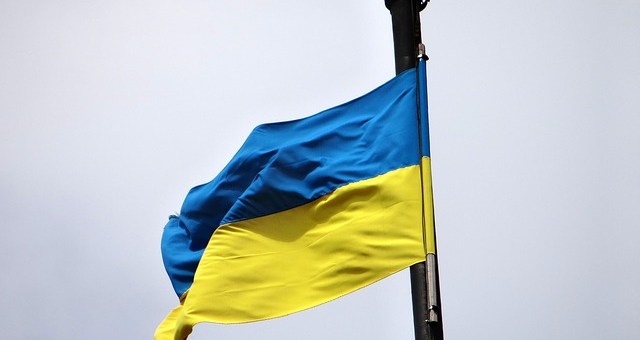
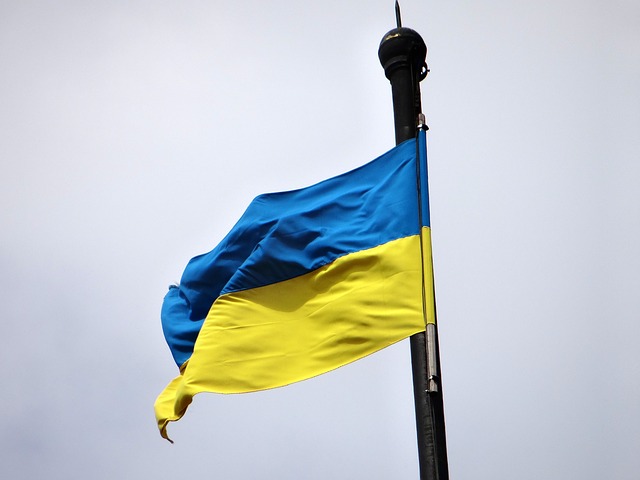
From the ancient monasteries of Kyiv to the bright, cheery sunflower fields that are represented in their national flag, Ukraine is a country with a rich and unique history – one that most folks likely don’t know much about.

This dedicated post will provide a short summary of pieces – or sunflower petals – of Ukrainian culture.

Language

Language has been a talking point in Ukraine for years and for good reason.

Oblasts in the East speak Russian, those in the West speak Ukrainian.

And those in some central oblasts speak a combination of both, called Surzhyk.

The language divide is due to the East’s proximity to Russia and the country’s historical ties with its neighbor.

While both languages use Cyrillic, the Ukrainian alphabet has the letters – “Ґ ґ,” “Є є,” “Ї ї,” and “І і” – while the Russian alphabet does not; and the Russian alphabet has the letters – “ы,” “Ё ё,” and “ъ” – while the Ukrainian alphabet does not. 

The languages are similar in grammar and vocalization, but the Ukrainian language is actually more closely related to its northern neighbor, Poland, when it comes to vocabulary.

Many who live in Ukraine are of Russian descent, with 17.3 percent of the population identifying as ethnically Russian in 2001.

Thus, since Crimea was annexed in 2014 and the eastern oblasts of Donetsk and Luhansk became occupied territories, language has become a hot-button issue in Ukrainian politics.

Traditions and Customs

Some of the country’s brightest traditions and customs come in the form of celebration.

Image credit: Jolanta Dyr from Pixabay

As mentioned, the colors of the Ukrainian flag represent the vast sunflower fields and the brilliant blue skies that paint the countryside – a true sight to behold.

Public domain

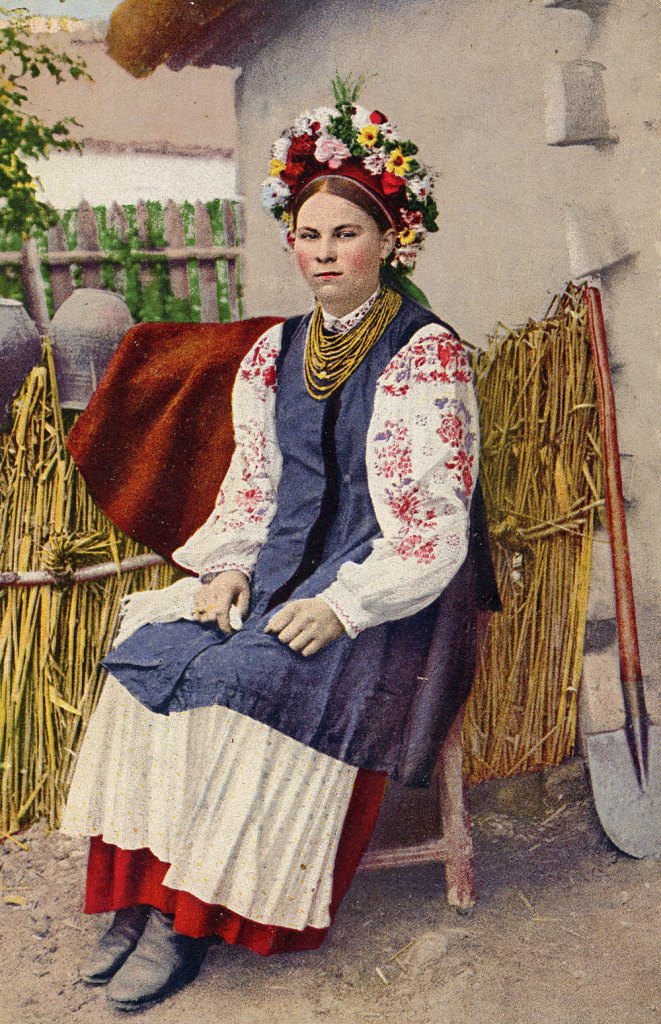
Traditional dress includes the vyshyvanka, an embroidered shirt. 

Often featuring black, white, and red thread, the embroidery design is specific to Ukrainian folk costumes.

Image by Yevhen Paramonov from Pixabay

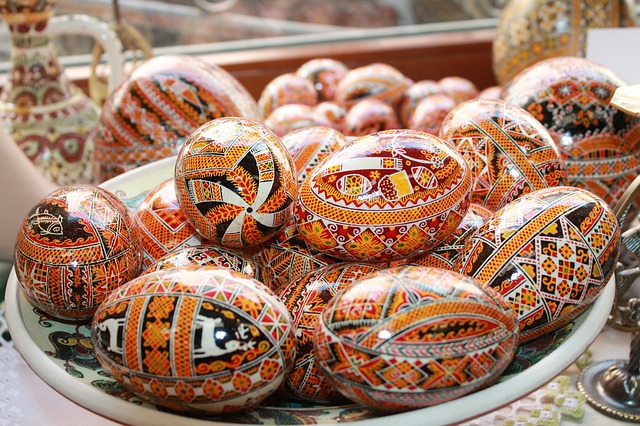
The famous Ukrainian decorated egg, the pysanka (derived from the word for “to write” or “to inscribe”), is made around Easter. 

Every pattern, detail, and coloring of the painted eggs means something.

And, according to legend, if the painting of the pysanka ceases, so does the world’s existence, as evil will overrun the world.

Slava Ukraini: Glory to Ukraine

“Ukraine is not yet dead, nor its glory and freedom”

“Ukraine is not yet dead, nor its glory and freedom,
Luck will still smile on us brother-Ukrainians.
Our enemies will die, as the dew does in the sunshine,
and we, too, brothers, we’ll live happily in our land.

We’ll not spare either our souls or bodies to get freedom
and we’ll prove that we brothers are of Kozak kin.”

These are the lyrics to the Ukrainian national anthem, translated.

The phrase you may be hearing frequently, “Slava Ukraini,” means “Glory to Ukraine.”

As this country continues to fight for its life, I hope every one of us watching can celebrate the great character and pride of its people.

Are Facial Expressions Perceived Differently Across Cultures? Find Out Here.

Languages have shaped our genetics in terms of physiological differences in speech.

The roof of the mouth, for instance, differs across cultures.

But language isn’t the only part of communication.

Facial expressions and mannerisms are a big part of communication, and the interpretation of these types of expression differs across cultures.

The facial musculature of humans is highly developed, far more so than in any other primate species.

As such, the lips and eyes reveal a lot about human emotion.

According to Herbert Gintis’ “Gene-culture coevolution and the nature of human sociality”:

“Humans have evolved a highly specialized and very costly complex of physiological characteristics that both presuppose and facilitate sophisticated aural and visual communication, whereas communication in other primates, lacking as they are in cumulative culture, goes little beyond simple calling and gesturing capacities.”

While other primate species’ may go “little beyond,” how far does ours go?

Emotional Expression

Prior studies have suggested that the evolutionary nature of facial expressions does not differ across cultures, but at least one study has found that expressions of happiness, anger, and sadness are perceived differently between the East and the West.

According to the study’s abstract:

“Briefly stated, the universality hypothesis claims that all humans communicate six basic internal emotional states (happy, surprise, fear, disgust, anger, and sad) using the same facial movements by virtue of their biological and evolutionary origins [Susskind JM, et al. (2008) Nat Neurosci 11:843–850].”

Published by the American Psychological Association in the Journal of Experimental Psychology: General, the research, led by Rachael E. Jack, PhD, of the University of Glasgow, opposes this theory.

The Study

Looking at the way in which Western Caucasians and East Asians view various expressions according to their facial features, two groups – one of Caucasians and one of Chinese participants – were selected.

The study’s participants viewed emotion-neutral faces that were altered at random using technology. They were asked to classify the faces as happy, sad, angry, disgusted, fearful, or surprised.

Researchers were then able to identify the facial features that the groups of participants associated with the emotions.

From the responses, researchers deduced that Western Caucasians focused more on the mouth and eyebrows when identifying facial expressions, while Chinese participants focused primarily on the eyes.

These differences can lead to complexities in communication across cultures, resulting in misinterpretation or missed signals of emotional expression. 

The findings support the concept of gene-culture coevolution and how culture is increasingly driving human behavior more than genetics.

We’ll talk more about cultural mannerisms and body language next week.