What Makes a ‘Face’: Losing Face, East vs. West

When you hear the term “losing face,” more often than not, you associate it with Eastern cultures. But people of every culture have “face” that they can either lose or save.

Basically, “face” is pride, esteem, and reputation, which is interpreted and determined in different ways, depending on the culture in which you live. Face is, in short, the idea that you must behave or achieve in a certain manner to preserve your image. What makes up your “face” and how to “save” it depends on what your culture values.

Face: East

Tradition is greatly emphasized in Eastern cultures, and face can be had by birth (i.e. if you were born into a family of status or wealth).

Last week, we talked about how collectivist societies tend to value group harmony over individualism. Personal ambition or success is much less important than improving the whole.

This prevents individualist characteristics from being fostered from youth. For instance, I’ve been told by Chinese students that they receive lower marks or fails on essays or exams if they contradict the teacher’s opinion or the culturally accepted sentiment on any given topic, no matter how well argued. For this reason and for similar standards set during primary socialization, you find fewer who will “rock the boat,” so to speak, in collectivist countries than you might in their capitalist counterparts.

Individualism is considered much more radical in places like China. It is not embraced, and those who are unconventional and break the mold are thought to be aggressive. Due to the fact that harmony is of the utmost importance to collectivist cultures, anyone considered disharmonious would lose face under this set of cultural values.

Face: West

Western cultural values lie in individualism and independence. They’re also geared toward innovation and so embrace change more readily over tradition.

And in the West, you must earn your face. It isn’t given to you. Even if you’re born into a wealthy family or a family of status, more often than not, you must prove yourself to establish a face.

To make your face, you must make yourself. And to do so in an individualist culture, you must stand out from the crowd. You can do this through professional/personal success or achievement, status, wealth, etc. And once you obtain a certain level of recognition, whether in your town or nationwide, whether in your company or your industry, you must reassert your voice regularly to maintain face.

What can make a Western person of stature lose face?

Disgrace can. Disgrace paramount to much of what is going on in America right now, with sexual assault and harassment scandals knocking down titans of entertainment, politics, and industry. This is just one of the things that can make a Westerner lose face.

Can Face Be Restored?

Face can be restored only through drastic measures in collectivist cultures. In the East, once one’s reputation has been damaged, it’s nearly impossible to recover. As put by sociologist Marcel Mauss, in such cultures, “to lose one’s face is to lose one’s spirit.” It’s better to avoid such face-destroying conflict, altogether.

In Western cultures, if face is lost, it can be more readily restored. In fact, many cheer comebacks, and the restoration of a good reputation might even be considered inspirational by some.

Whether face is restored or not, the loss of it cuts deep in any culture.

Next week, we’ll continue contrasting Eastern and the Western values by discussing the differences in social power structures and business culture. Stay tuned.


Step 4 of Cross-Cultural Integration: Adopting

Adopting a child isn’t an easy process, so imagine adopting an entire culture.

To adopt means “to take up or start to use or follow (an idea, method, or course of action)” or “to take on or assume (an attitude or position).” So in relation to cultural integration, adopting can be defined as taking on the ideas and methods, as well as the attitudes and positions of a culture.

This may not be easy to do, nor is it absolutely necessary to adequate integration if you are temporarily living in a foreign culture.

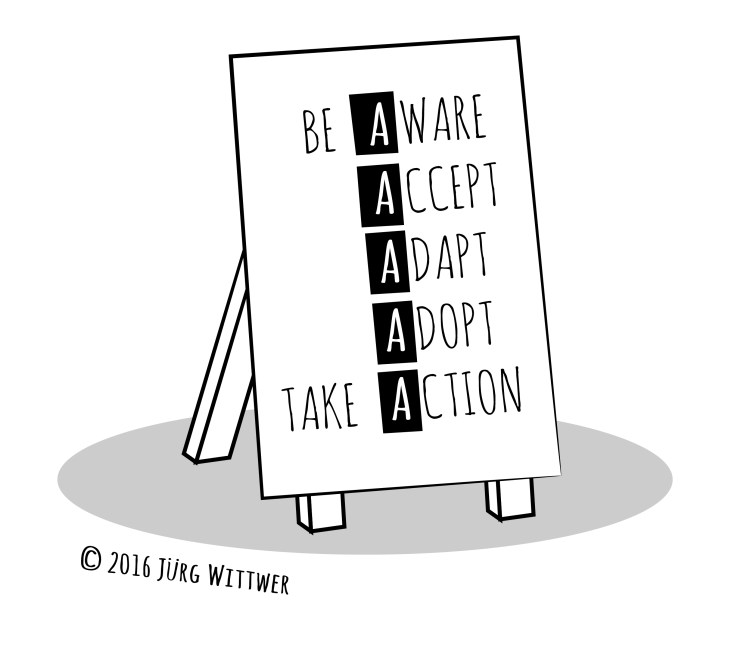
However, after Awareness, Accepting, and Adapting, Adopting is one of the final steps to complete cultural integration.

Do I have to adopt the entire culture?

It’s unlikely that you’ll adopt every aspect of a new culture as your own, but as with adapting, adopting some parts of your host culture will enable integration.

It’s up to you to choose which parts of a culture you’d like to adopt. In this way, adopting a culture is unique to everyone.

To University of Illinois Multicultural Communications Professor, Dr. Elaine Yuan, adopting a culture “means to know the local language well in order to express oneself freely, to know the local social psychology and etiquettes well in order to make friends, build social support and feel comfortable in this foreign social environment.”

In the Life Made Simple blog, Yuan – who is originally from Beijing, China – credits communication with locals and the willingness to learn as incredibly helpful to the adoption process.

What types of things can I adopt?

There are so many beautiful aspects of a foreign culture you might choose to adopt.

Some great practices include:

  • The Navajo tradition of celebrating a baby’s first laugh by throwing a party…while the person who made the baby laugh foots the bill
  • The April 23rd celebration in Barcelona called “The Day of the Book and the Rose,” in which women gift men with a book and are given a rose in return…or the other way around, if you’re nontraditional
  • The Finnish custom of providing pregnant mothers with a gift box of essentials – onesies, diapers, bath products, bedding, etc. – which, according to the BBC, is “a tradition that dates back to the 1930s…designed to give all children in Finland, no matter what background they’re from, an equal start in life”

All aspects and practices of a culture are up for adoption. And choosing to integrate these into your own life will make you feel one with a foreign culture.

How do I adopt?

To adopt, all you must do is put another culture’s ideas, methods, attitudes, positions, or traditions into practice. If you live long enough in a foreign culture, doing so needn’t be forced. There’s no method to getting there, but the steps of awareness, accepting and adapting will certainly lead naturally to adopting.

With time and openness, these last steps of integration will develop organically.

Step 3 of Cross-Cultural Integration: Adapting

Do chopsticks seem illogical to you? Is squatting to use a toilet too unfamiliar to fathom? Have you ever felt your worldview being threatened while traveling or living abroad?

You’re not alone. These thoughts arise when you’re living in a foreign culture. As you start to see how culture shapes our world, accepting behaviors that seem oddly shaped is the first step to integration.

Just as you wish to be accepted by your foreign colleagues, you must accept them. And that means accepting their culture. This is the foundation of successfully leading in a foreign culture.

More than simply accepting, you must also adapt. This is the application of your acceptance, where you begin to integrate foreign behaviors into your daily routine and foreign ideas and attitudes into your thought processes.

How Do You Adapt?

Say, you’re from the UK. You normally take dinner anywhere from 6:30 to 8:30 PM, right after you get home from work. You’re used to this schedule.

Your work relocates you to Spain. Your colleagues invite you out to dinner regularly, but they don’t eat until 9 to 10:30 pm. By then, you’re ready to chew your arm off.

Would you get hangry and call off dinner? Or would you adapt the Spanish eating schedule?

Well, first, you might try and understand why the Spanish eat so late.

According to donquijote.org, lunch is the most important meal of the day in Spain, and it’s also when many take their 2 to 4 pm siesta. This pushes the end of the workday to a later hour, because when they return from lunch, they stay until 8 pm. Then, they usually have a merienda, which is a light snack until dinner is served.

In order to integrate into Spanish culture, eating late is certainly something you can accept and adapt as your own. This will help you become part of your colleagues’ culture, and they’ll start to accept you as one of their own too.

Do My Values Change When I Adapt?

You might be afraid that you’ll lose yourself if you adapt too much of another’s culture. But remember the following:

Adapting requires a change in behavior, not a change in values.

That’s not to say you won’t adopt foreign cultural values at some point. You may consider new ideas, behaviors, or philosophies valid and even truer to yourself than those of your own culture. That’s when you’ll adopt.

But such significant transformations are not fast, easy, nor are they painless. They will take much longer than simply changing your eating schedule. We’ll cover this topic in a later post.

Step 2 of Cross-Cultural Integration: Accepting

Last week, we talked about awareness. Awareness of culture differences throws a fork in the road: once you’re aware of differences, you can either tolerate or be intolerant toward cultural values and norms.

This is where acceptance comes in.

Acceptance plays a huge role in your cultural integration. To be successful, you must accept the culture into which you’re integrating. If you reject it, then you will ultimately fail in this foreign culture.

But, then again, there will be things you willingly accept and things you morally reject.

What Must You Accept?

A myriad of cultural values and norms must be accepted if you want to integrate into a culture. Some will be easy; others will be hard. Here are some examples.

Easy to accept:

Hard to accept:

Whether it’s adapting to the time management mantra of “it will get done when it gets done” in cultures like Nepal or India or accepting that South Koreans eat dog meat or that the French eat horse meat, you must accept that things are morally sound in some countries, even when they’re unsound in your own.

How Do You Accept Something You Morally Reject?

If you have ethical issues with the cultural norm, you can draw the line at accepting another’s culture instead of adopting it.

For example, let’s talk about headscarves. Women from Western cultures often morally reject the idea of wearing the Muslim hijab. Some see it as oppressive and as a way to control women and their human rights.

As reported by Independent, in 2016 an entire Air France cabin crew refused to fly to Iran when they were ordered by the airline chief to wear headscarves upon disembarking the flight in Tehran.

When venturing into a country like Iran or Saudi Arabia, not only might a Western woman feel uncomfortable wearing the hijab, but she might feel as though she’s complicit in what she views as oppression of women by following this custom.

If they reject this custom, then they won’t be able to do business in this country, as happened in the case of Marie Le Pen, France’s far-right presidential candidate, when she refused to wear a headscarf on her visit to Lebanon in February.

According to The Washington Post, “Marine Le Pen walked away from a meeting with Lebanon’s top Sunni Muslim leaders after she refused to wear a headscarf. The move sparked an outcry across the Arab world.”

The question is: is it worth it to spark an outcry?

You Draw the Line

As with most things, it depends on the situation and your own personal standards. YOU draw the line between what you culturally accept, what you adopt, and how far you choose to integrate into a culture.

You may come to accept things as small as greetings and time management, but those that touch upon a moral obligation will be harder to accept or adopt. It’s up to you to draw that line for yourself.

I’ll tell you how I drew my own line next week.


Step 1 of Cross-Cultural Integration: Awareness in Action

Awareness of cultural differences creates the capacity to be culturally sensitive.

Note that I didn’t say it will create cultural sensitivity; rather, it will create the capacity to be culturally sensitive.

Cultural sensitivity is a choice, and if you want to successfully work and integrate into a foreign culture, it’s a necessary one. Being aware that you are the monkey will enable you to demonstrate cultural sensitivity and actively Accept, Adapt, and Adopt the ways of your host culture, all of which will ease your integration.

Stages of Cultural Awareness

Not everyone is culturally aware.

Some choose not to be, while some are innately oblivious. Others choose cultural sensitivity, and still, others have become so integrated that sensitivity soon becomes natural to them.

There are four stages of cultural awareness:

  • Unconscious incompetence (blissful ignorance)
  • Conscious incompetence (troubling ignorance)
  • Conscious competence (deliberate sensitivity)
  • Unconscious competence (spontaneous sensitivity)

The unconsciously incompetent doesn’t know he’s the monkey. He is not culturally aware.

The consciously incompetent knows she’s the monkey but doesn’t try to integrate. She is culturally aware but is stubborn to change.

The consciously competent makes deliberate efforts to be culturally sensitive. He is culturally aware and is trying to actively integrate.

And, lastly, the unconsciously competent has fully integrated. Cultural sensitivity becomes natural to her, and she no longer must think about how to act or behave around the host culture. She just does it.

Example 1: Awareness Inaction

I once worked with a conscious incompetent. This individual’s foreign integration was being aided through cultural awareness and language training. When he wasn’t grasping the language as quickly as he wanted to, he became frustrated with the language instructor. In fact, he had a shouting match with said instructor and deemed the culture “inept” during cultural awareness lessons.

Two years later, I met this same man as he was finishing his contract. The entire two years he’d been involved in the program, he’d not advanced his language beyond the proficiency of the initial three-month course, nor had he initiated any projects at site. He blamed his hosts for a lack of interest.

In the end, he only had bad things to say about the host country, the program, the community in which he’d lived, and the colleagues with which he’d worked. And I’m sure they didn’t have too many positive things to say about him.

This is conscious incompetence in a nutshell: an awareness of cultural differences, but a refusal to integrate. And the result is zero self-growth and complete inaction regarding project developments and cross-cultural understanding.

Example 2: Awareness in Action

In that same program, I met a woman who came to the host country with no knowledge of the language. She was active in learning during the three-month language training and was adamant about presenting herself with cross-cultural sensitivity.

She faced similar cultural issues at site as the man had. Sometimes there was a general lack of interest in her ideas and lackluster motivation from her colleagues. But utilizing her conscious competence, she rallied her host site around her, wrote a grant, ran a summer camp, put on a cultural afterschool program, and was extremely active in her community. She also continued to work on her language and, by the end of her term, had advanced to intermediate language proficiency.

She had grown personally, had provided great value to her school and community, and had left a positive imprint in the memories of all those who worked with her. And, by the end of her two-year contract, she’d achieved stage 3 in her cultural awareness and was well on her way to stage 4: unconscious competence. Her cultural sensitivity had become natural; she no longer had to think before acting.

This is the difference between awareness inaction and awareness in action. The key to making your awareness active is to Accept, Adapt, and Adopt your host culture.

We’ll take a look at accepting next week.

Viewing Others Through Your Own Culture-Tinted Glasses

It’s human nature to consider yourself and your culture “normal,” and others as strange or foreign. Because they are just that – foreign to you.

But believe it or not, you are not “normal.” Not necessarily, anyway.

Normal behaviors, attitudes, beliefs, and ways are relative to culture. Culture shapes our world and our worldview. What is considered normal or preferred in one culture will be viewed as abnormal and odd in another.

The following three tips will help you view others without judgment, even while looking through your own culture-tinted glasses.

Tip 1: Remember YOU are the Monkey

In my book, I am the Monkey, I break down what it means to integrate into a new culture through a zoo analogy.

When you enter a foreign culture, you may feel like the spectator in the zoo – the human, not the animal. You might believe yourself normal and even superior to the culture around you, while considering your colleagues all odd ducks. But, in reality, you are the monkey. You’re the “abnormal” one.

While you judge the culture into which you’re integrating, it’s important to remember that you’re in their territory. They’re the normal ones here, and you are the monkey that’s out of place.

Remind yourself this, as you don your culture-tinted glasses: whenever you’re a guest in a foreign land, you are being judged according to their cultural values and norms (which we’ll discuss later on in this blog).

Tip 2: Take Baby-steps to Integrate

A monkey who starts learning how to get around isn’t likely to be swinging from limb to limb like Tarzan straight away. Don’t get frustrated by this, and don’t lash out at your host country’s culture.

That’s easier said than done. You will get frustrated at times – with yourself, with your hosts, with the culture – but don’t allow that frustration to become a brick wall to successful integration.

Make an effort to learn the language and customs. These are the first baby-steps to learning the culture and viewing it without judgment.

Tip 3: Remove Your Culture-tinted Glasses

Once you’ve begun the process of integration, it will soon be time to remove your culture-tinted glasses. And that’s what this blog is all about: helping you to live and manage across cultures by integrating to the point that you start to see the culture through its own eyes, instead of your own near-sighted bias.

You can do this through the five steps outlined in my book:

no_monkey_character_CMYK-02

I’ll talk about these steps in greater detail over the coming weeks.

How Culture Shapes Our World

You woke up this morning and ate a breakfast of eggs and toast without consciously realizing that breakfast was culture.

You dressed, got ready, did your hair, suited up without realizing that style is culture.

You went to work by metro, jostled in between a man in sneakers and sweatpants and a woman in a pantsuit, both on their smartphones, without realizing that mode of transportation, personal space, and gender equality are culture.

You sat in on a morning meeting, putting forth your ideas, your boss nodding along, without realizing that business and hierarchical structures are culture.

You chatted with your colleagues about the latest episode of Game of Thrones without realizing communication and entertainment are culture.

Although culture can appear in the form of tangible things – fashion, entertainment, food, etc. – our own culture is, for the most part, invisible. We don’t often say, “Hey, look – there’s culture!” We breathe it without thinking about it.

And, yet, culture shapes everything in our world.

The Not-So-Invisible Shapes of Culture

Being that culture is so alive and vibrant, it’s not so much that you don’t see culture or know it’s there. The thing is, you’re often blind to your own culture, until it’s contrasted with others.

For instance, here are a few cultural differences. Consider your own culture’s preferences in contrast with those below:

  • Greetings – a handshake in America, a kiss on both cheeks in Italy, a bow in Japan
  • Breakfast – a croissant in France, bread and honey in Morocco, fried noodles in China
  • Common mode of transport – a car in Los Angeles, the Underground in London, a bicycle in Amsterdam
  • Punctuality – extremely punctual in Switzerland, very late in Thailand, punctual in business/not so much in personal matters in Chile
  • Sports – hockey in Canada, cricket in India, football basically everywhere else in the world

These are just some of the ways in which cultures differ. Now, imagine yourself trying to integrate some of these foreign cultural preferences into your life.

Cross-Cultural Understanding

Most of the things around you are culture, from what you eat to what you watch to what you wear, from how you get around to how you think and speak. Apart from your genetic material, culture is everything that shapes who you are and how you view the world.

Knowing all this, in order to integrate into another culture, you must make an effort to stop Viewing Others Through Your Own Culture-Tinted Glasses.

Next week, I’ll provide tips on how to do just that. Stay tuned.