“I’m the Decider.” Decision-Making & Coping Strategies in Individualist vs. Collectivist Cultures

Do you make good decisions?

Do you feel you do…and do you actually?

This study in the International Journal of Psychology strove to uncover whether individualist or collectivist cultures were more confident in their decision-making.

It also examined various cultures’ decision-making styles and coping strategies.

Here’s what the study found.

The Subjects

Researchers recruited students from three individualistic Western countries (USA, Australia, and New Zealand) and three collectivist Eastern Asian cultures (Japan, Hong Kong, and Taiwan) to participate in their experiment.

The purpose of the study was to measure participants’ confidence in their decision-making abilities and the coping patterns they employ.

The Statements

Participants were handed a questionnaire that would unveil the way they view their own decision-making. 

Rating themselves from 0 to 12, the questionnaire prompted with thought-provoking statements like:

  • I think I am a good decision maker
  • I like to consider all of the alternatives
  • I avoid making decisions
  • Even after I have made a decision, I delay acting upon it

This self-reflection and self-reporting led to some exciting finds.

The Coping Strategies

The coping strategies identified by the study included:

  • Vigilance – a careful decision-making style, where every alternative is thoroughly considered. 
  • Buck-passing – dodging decisions and shifting responsibility to someone else. 
  • Procrastination – delaying action even after a decision has been made. 
  • Hypervigilance – a panic-induced decision-making style that makes you feel like time is about to explode.

The Results 

The students from the individualistic Western countries displayed confidence in their decision-making abilities, while their collectivist Eastern Asian counterparts scored higher in buck-passing, avoiding decisions, and hypervigilance.

But what was surprising about this study was that, despite these cultural differences, all six countries showed similar ratings. 

Across all countries, all participants who had higher decision-making self-esteem were more likely to adopt adaptive coping patterns like vigilance. 

On the flip side, those who doubted their decision-making abilities were prone to fall into the abyss of maladaptive coping strategies – buck-passing, avoidance, and hypervigilance.

Potential Flaws in the Study

Some things to keep in mind about the potential flaws in this study are that decision-making strategies depend on the situation.

You might make impulsive decisions in some cases and vigilant ones in others. 

The study did not account for the varied approaches to decision-making according to different scenarios.

Moreover, the difference in cultural values may impact the self-reporting. 

For instance, in many Asian cultures, boasting about oneself or decision-making prowess isn’t the norm. This could have influenced the participants’ responses, leading to hidden biases.

Lastly, self-reporting on decision-making is, of course, subjective and may not align with actual behavior. To get to the bottom of that, researchers would have to observe the participants’ decision-making in action. 

Regardless of the approach, this study uncovers the dynamic relationship between culture, self-esteem, and coping strategies.

The bottom line is decision-making is complex – influenced by context, societal expectations, and our true behavior in the face of tough choices.

Christmas Around the World: Interesting Cultural Christmas Characters & Traditions, PART II

Ho, ho, ho, and a Merry Christmas and Happy Holidays to all you readers!

Last year, we talked about Christmas traditions from Italy, the Netherlands, and Austria.

This year, we will explore traditions from countries south of the equator – Australia, Brazil, and Argentina.

Let’s jump right in!

Surfing Santa in Australia

Though it’s summer in Australia at Christmas time and there’s no real snow to be found, Aussies fold in their own fun-in-the-sun Christmas traditions.

For one, Australian Santa surfs.

Abandoning the traditional white-fur-lined red fleece suit and black winter boots, you’re more likely to see Santa in board shorts on the beach on Christmas day.

And instead of the roast turkey or ham spread found in some western countries, Aussies pack in the prawns for their Christmas meal.

This requires a “prawn run,” where an unfortunate family member will be sent to stand in line at the nearest packed seafood store in the morning to buy the freshest grub.

Thirteenth Salary in Brazil

While Christmas Day may be the more lively celebration in some countries, Christmas Eve is where it’s at in Brazil.

Often people dress up in their finest to visit their friends in the afternoon and hold a huge celebration with their families in the evening.

Dinner is served around 10 PM, and midnight is when presents are exchanged or “Missa de Gallo” (Midnight Mass) is attended by the religious.

There’s no chimney-diving for Papai Noel in Brazil; instead, he drops on by to replace stockings left on windowsills with presents.

And to help Papai Noel provide gifts for Christmas, most employees are given a “thirteenth salary” (two months’ pay) in November/December – a scheme introduced by former president João Goulart in the ‘60s to boost the economy before Christmas time.

Three Kings Day in Argentina

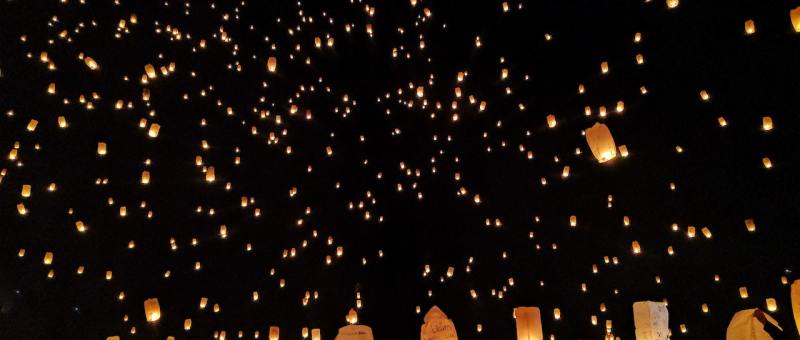
While you can enjoy incredible fireworks displays at midnight on Christmas Eve in Argentina, as well as small paper lanterns called “globos” sent into the sky, you’ll have to wait a couple of weeks to open your presents.

Three Kings Day, celebrated on January 6, is when most families receive their gifts in Argentina.

Instead of Santa or Papa Noel delivering the gifts to children, the Three Kings – who delivered gifts to the baby Jesus – will leave them in children’s shoes.

Despite this tradition, Santa is growing popular in Argentina – only there, he is known as “El Gordo de Navidad,” literally translated to “The Christmas Fat.”

As this list shows, wherever you are this Christmas, you’re bound to experience new and exciting ways to celebrate the holiday!

“Western Culture” as a Stereotype: Defining “The West”

Over the last few weeks, we’ve talked about stereotypes: how they can be harmful and ways in which you can use them wisely to aid cross-cultural understanding.

In fact, we use stereotypes a lot in this blog.

One of these stereotypes is the broad term, “Western culture,” which is associated with core values, norms, and beliefs.

But what, exactly, is it?

What is “Western Culture”?

What do you think of when you hear the term, “Western culture”?

You probably think of Europe, the United States, Australia, Canada – the latter three of which are highly influenced by Europe, due to their historical roots.

All of these countries mentioned (and others that fall under the umbrella of “Western culture”) hold a common set of values and norms.

However, as we’ve also highlighted in this blog, values and norms vary widely across the countries that fall under this umbrella.

In the U.K., queues are law; in Italy, it’s every man for himself.

German companies run like well-oiled machines; French companies are like royal courts.

Despite these cultural differences on a country-by-country basis, Western cultures share strong commonalities, due to their historical heritage under the Ancient Greek and Roman Empires, as well as the influence of Judeo-Christian religions.

Moreover, 18th-century Enlightenment in Europe brought forth a rationalist and secular-oriented ideology focused on social and scientific progress.

This drove such democratic values as the separation of church and state, human rights, capitalism, modern technology, and political pluralism.

Western Culture is a Stereotype 

Up until now, we never defined “Western culture” in this blog.

Yet, somehow, we all understood what it means.

This is due to the fact that “Western culture” is as much a stereotype as anything else. 

The behaviors of someone from “the West” are fixed in our mind, contrasted with how those from an Eastern culture might act or the ideology and values they might live by.

So, while we know there are differences between the values and behaviors of Australians, Europeans, Americans, etc. – and even further, between countries, regions, subcultures, and even individuals in each culture – we still recognize the broad commonalities that exist across all of “the West.” 

Use Your Discretion

If I board a plane and am seated between a Swiss person and an American, I would be more inclined to talk to the American.

This is not because I am opposed to the Swiss (I am Swiss); it’s because I want to be courteous.

Americans generally like small talk with strangers in public settings; Swiss generally don’t.

However, some Swiss might actually be prone to small talk, while some Americans will put their earbuds in immediately.

The point is, when it comes to stereotypes, applying them wisely means to use your discretion when approaching each individual.

Test the waters, apply your observational skills, and proceed accordingly.

Stereotypes blanket entire populaces, but they don’t take into account the individuality of people.

So, rather than presuming each person is attached to the stereotypical values, norms, and behaviors of their cultures, tuning in to the individual nature of a person’s preferences, priorities, and behaviors will allow you to avoid misusing stereotypes.