Introverts Around the World: Getting to Know the Most Introverted Countries

If you’re an introvert planning your next vacation, these reserved countries are for you. 

As an introvert, you might long for destinations where solitude is celebrated and quiet moments are abundant. 

Interestingly, due to their cultural tendencies and geographical landscapes, some countries naturally cater to introverts . 

The insights I’m about to share were gathered from a three-year study involving 40.1 million individuals who took the NERIS Type Explorer personality test

Countries with fewer than 1,000 respondents were excluded, ensuring a robust dataset.

Let’s explore some of the world’s most introverted countries, where peace and privacy reign supreme.

European Nations: Lithuania, Poland, & Finland

Lithuania leads with 55.6% of its population identifying as introverted. 

This Baltic nation is known for its serene landscapes and historical sites. 

The Lithuanian culture emphasizes quiet and reflection, making it a haven for introverts.

Poland, with 54.83% introverted, has a reputation for being reserved. 

The Polish people are known for their quiet nature, which can initially seem introverted to outsiders. 

This demeanor is deeply rooted in cultural traits that value privacy and thoughtful interactions. 

The peaceful countryside, alongside the historic cities of Warsaw and Krakow, provides a perfect backdrop for those seeking solitude and reflection.

Finland, with 54.65% introverted, is renowned for its northern location and pristine natural beauty. 

The Finnish culture values silence and personal space, with locals often retreating to summer cottages by lakes or enjoying the quietude of the forests. 

Finland’s emphasis on nature and simplicity creates an environment where introverts can truly thrive.

Asian Countries: Russia & The Maldives

Russia, with 53.9% of its population identifying as introverted, is known for its vast, sprawling landscapes.

Home to the enormous, sparsely populated Siberian tundra, the country’s introverted nature is evident in its numerous bed-and-breakfast inns and secluded retreats.

The Maldives isn’t too far behind, with 53.89% of its population identifying as introverted. 

This archipelago in the Indian Ocean is renowned for its stunning coral reefs, luxurious overwater bungalows, and serene beaches. 

The Maldivian culture values privacy and relaxation, creating a perfect setting for introverts to unwind and rejuvenate.

North America: Canada

Canada, with 51.24% of its population identifying as introverted, is known for its politeness and reserved demeanor. 

The country’s vast wilderness areas, from the Rocky Mountains to the serene shores of its many lakes, offer expansive natural beauty and tranquility. 

Introverts find solace in Canada’s unassuming charm and untouched nature.

South America: Chile, Brazil, & Argentina

What came as a surprise to me is that many nations in South America were high on the list of introversion.

Chile has a 55.46% introverted population, characterized by its stunning remote landscapes, from the Atacama Desert to the Andes Mountains. 

Chilean culture respects introspection in line with many of the cultures on this list..

Brazil, with 54.93% introverted, offers a unique blend of vibrant culture and personal space. 

While famous for its lively festivals, many Brazilians value quiet time, illustrated in the country’s rainforests and serene beaches.

Argentina, with 54.57% introverted, showcases its introverted disposition through a distinct sense of individuality and privacy. 

The country balances vibrant cultural life with secluded retreats, from the bustling streets of Buenos Aires to the remote Patagonian landscapes, making Argentina an appealing destination for introverts.

Africa: Algeria

Algeria was the only African country to make the top 10.

Algeria, with 51.15% of its population identifying as introverted, is known for its vast desert landscape – home to the Sahara, the world’s largest desert. 

This North African country offers a unique environment where its introverted nature is complemented by a respect for personal space and privacy.

This exploration into the world’s most introverted nations highlights the beauty of cultural diversity and the importance of finding vacation locations – and potential homes – that resonate with our personalities.

Culture & “The Bubble”: Closing the Gap of Personal Space

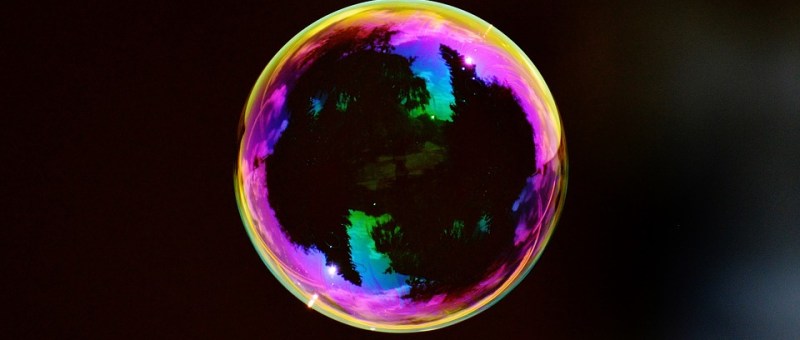
A tennis ball.

A volleyball.

A beach ball.

An ocean.

Whatever size our bubble is, we each walk around inside our own yardstick of personal space.

Last week, we talked about how culture and the climate, along with the level of intimacy in relationships, can all affect the degree of our bubble.

This week, we’ll talk about how to close that gap – or at least become more comfortable with it – when living in a foreign culture.

The American Bubble

Americans value personal space. 

International student guides to the US even highlight this preference:

“If you try to get too close to an American during your conversation, he or she will feel that you are ‘in their face’ and will try to back away. Try to be aware of this, so if the person to whom you are speaking backs away a little, don’t try to close the gap.”

More advice given to international students to the US includes:

  • Shake hands upon meeting
  • Avoid all other physical contact while speaking with casual acquaintances (no arm over the shoulder, arm touching, hand holding, etc.)

Americans clearly have a preference for physical distance and no body contact…at least when it comes to strangers and casual acquaintances.

So, how do American managers deal with more touchy-feely cultures abroad?

Insert Desk Here

Latin America is a physically close culture, as was illustrated in the study discussed in last week’s post.

Imagine an American manager entering into this tennis ball-sized bubble culture.

When speaking with an employee, said employee stands too close for comfort, forcing the manager to step backwards to regain his bubble. But in doing so, the employee steps closer again, because he is uncomfortable with the wide gap.

While savvy American managers who work in Latin America want to adapt cross-culturally, those who can’t bear the physical closeness often use a small trick to avoid it with their colleagues and employees.

Instead of taking a step back, they close the gap with an object – like a table or desk – thereby creating the gap for them. This way, the employee is at a comfortable distance, while not feeling uncomfortable, himself, with the object-made gap.

Sometimes, closing the gap is not easy (see: the Japanese woman who forced herself to adapt to the Spanish greeting of kisses); other times, it’s as easy as a desk.

Culture & “The Bubble”: How Norms Affect Personal Space

How big is your personal bubble?

Does the distance differ between a stranger, an acquaintance, a friend?

Over the last few weeks, we’ve been talking about kissing across cultures and the intimacy of cultural greetings. This all relates to cultural norms and, particularly, personal distance.

Safe Space

People of every culture like to keep a safe space from others, whether they’re talking, walking, or taking public transport. This invisible boundary, while sometimes particular to an individual, also has roots in the cultural baobab.

When someone trespasses this space, particularly if they’re a stranger or specifically unwanted within the bubble, the person whose space has been invaded will instinctively move away in order to regain their boundary of comfort.

Why do we have this sense of personal space? Do we fear bad breath or B.O.?

Well, that may be an issue…but, more importantly, the close proximity lends itself to a sense of intimacy that may be incongruent to the relationship between two people.

When our space is invaded, a ping of fear is triggered in the amygdala of the brain. Though mostly subconscious, this emotional reaction is established during primary socialization around the age of 3 or 4, which is when personal space starts to develop and is later fully formed in adolescence.

While matters of personal space may be somewhat suppressed when in a particular setting (on an elevator or a packed metro, for instance), the feeling of discomfort is still there. And, as mentioned, it often differs according to an individual’s relationship with the other person.

You’re Getting Warmer…

So, what makes a culture “colder” or “warmer” than another in relation to this bubble?

Funnily enough, often the temperature. 

A study published in the Journal of Cross-Cultural Psychology examined cultures and personal space, gathering information from around 9,000 people in 42 countries. Researchers were particularly interested in whether or not climate impacted a culture’s norms regarding personal space.

An earlier study had concluded that there were “contact” cultures ( Latin American, Arabian, and southern European) and “non-contact” cultures (North American, northern European, and areas of Asia).

Individuals were asked at what distance they were comfortable standing next to a close friend, an acquaintance, and a stranger. The study found that it was often the case that the warmer the climate, the thinner the bubble.

Argentina had the narrowest personal gap, being at as comfortable a distance with a stranger as a Canadian was with a close friend. On the other hand, Romanians had the widest bubble when it came to strangers (>1.3 meters) but one of the smallest for close friends (40 cm).

While this doesn’t illustrate a clear cut theory on warm vs. cold climates producing warm vs. cold cultures, in general, the higher a country’s temperature the narrower “the bubble” between strangers.

Next week, we’ll talk about ways of “closing the gap” of personal space across cultures.

How to Deal with Body Contact & Personal Space in Foreign Cultures

Do you bow, shake hands, or hug when you greet someone? Do you kiss on both cheeks?

How much space do you need to feel comfortable on the metro?

What is appropriate touching in your culture?

We’ve been talking about visual frameworks and the way different cultures perceive the world. Aside from vision, all four of our other senses have cultural sensitivities as well.

And touching is one of them.

Cross-Cultural Business Etiquette

When you live and work in a foreign culture, you might find your colleagues are comfortable with a different level of body contact and personal space.

One example: I was relocated to Madrid, Spain when I was a young manager. In Spain, you often find yourself negotiating over long lunches that wind down toward late afternoon.

I’d always know when the “real deal” was going down, because if my arm was resting on the table, my negotiating partner would place his hand on my arm. That gesture typically meant we were getting down to business.

To one who is accustomed to such a level of body contact, this action would be perceived as ordinary.

But for those from a culture with a different perception of touch, the body contact would probably be exceedingly uncomfortable and might even be viewed as inappropriate. Especially in a business meeting.

To Hug or Not to Hug

At around the same time I was being made uncomfortable in my meeting, my wife was taking a Spanish course alongside the wife of a Japanese diplomat.

Japanese culture views body contact of any kind with strangers or colleagues as intimate – even forbidden.

So, imagine her discomfort with the Spanish greeting of a kiss on both cheeks.

Not only do the Spanish kiss; they greet with effusive familiarity. And this woman had not only grown with the primary socialization of her culture, but was also raised in an aristocratic family, who reinforced those strict values and norms.

She explained to my wife how difficult it was to adapt. And it’s easy to understand why.

Do You Adapt?

Imagine you traveled to Zuma (a made-up country), where people – men and women – greeted you by rubbing their chest on you.

Remember, breasts are not viewed as a sexual part of the body in many cultures.

Knowing that, would you be comfortable with this greeting? And the real question: would you adapt to it?

The alternative is to stubbornly abide by your own cultural norms, awkwardly refusing to greet in this manner the rest of your days in this foreign country. But in doing so, you are saying to the locals: “I am the Monkey! I refuse to embrace your ways.”

And in making this choice, your new culture will not fully embrace you in return.