
Inside Jokes & Cultural Context: When Humor Is Lost in Translation

Ricky Gervais, Gad Elmaleh, Dave Chappelle, Ken Shimura. Take a look at your favorite comics, and you’ll often find that humor is rooted in shared experiences.

A shared cultural background and community often helps in connecting with what makes humor humorous. Without insider knowledge and localized context, jokes about politics, social norms, and everyday life are totally lost on outsiders.

The slapstick comedy that makes people laugh in one part of the world may leave those in another part rolling their eyes. The sarcasm some cultures find witty may confuse or offend others. And puns aren’t punny to those who don’t know the language or idioms enough to follow.

So, let’s explore humor across several cultures to identify where we might divide or come together.

British Sarcasm: Wit or Confusion?

“Let’s face it, the gene pool needs a little chlorine.” – Jimmy Carr

Irony is the Brits’ cup of tea.

With a dry, understated humor, the Brits have taken sarcasm to the next level.

They love deadpan, banter, innuendo, puns. It’s all part of their wit.

Monty Python is heavy with satire and wordplay. To a Brit, it’s hilarious – because they’ve learned to use sarcasm to deal with life’s sometimes painful and complex aspects. 

But to someone unfamiliar with the British way of speaking, their sarcasm can be baffling or even sound like genuine complaining. 

Without understanding the cultural context or the delivery, the humor is lost.

Japanese Puns: Wordplay That Falls Flat

In Japanese, puns are called dajare – literally “bad jokes” – and they’re the local version of dad jokes. These rely on homophones and wordplay, often charmingly silly.

Take this classic:

アルミ缶の上にある蜜柑 (arumi kan no ue ni aru mikan)

“A tangerine on an aluminum can.”

It plays on how “arumi kan” (aluminum can) and “aru mikan” (there is a mikan/tangerine) sound nearly identical. 

The result? A pun that’s more about the sound than the punchline

As you can see, to a non-Japanese speaker or one who is not fluent, this would just sound like a string of random words without any punchline. 

The humor relies on the nuance of Japanese language, which doesn’t translate well into other languages – and this can be said about puns in any language/culture.

When it comes to humor, context truly is king. A joke that causes audiences to double over with laughter in one country may fall flat in another…or may even be deemed offensive.

That’s why understanding humor in a cross-cultural context isn’t just about the words; it’s about the culture that shapes them.
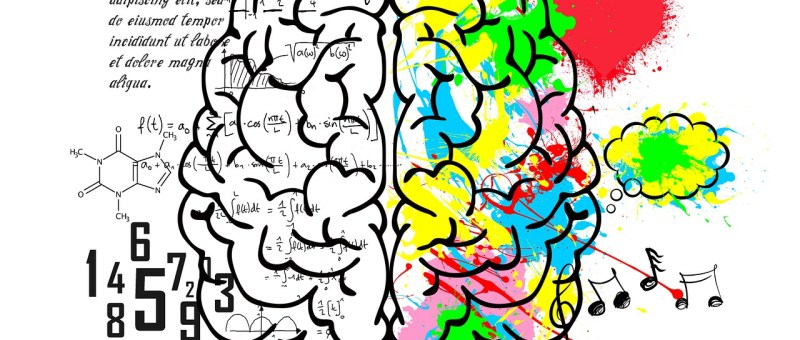
Left or Right Brain: Which Side Gets More Exercise in Language Learning?

Are you a right-brain thinker? Or a left-brain thinker?

In other words, are you a creative, innovative type (right-brain)? Or are you logical and analytical (left-brain)?

And which side is a stronger language learner?

Never fear: both sides of the brain assist language learning, according to research. 

But to different degrees and in different ways.

Let’s see how.

Left Side Activated

The left hemisphere of the brain stores some 90 percent of our native language.

This is why it’s long been thought that left-brain thinkers may have a better capacity to learn a second language.

The left frontal lobe – specifically Broca’s area – activates the production and articulation of speech.

The left temporal lobe – specifically the Wernicke’s area – influences language comprehension and development.

This does not mean language learning only involves the left side of the brain; both sides work together in the learning and production of language.

Various parts of the brain are activated to degrees, depending on what aspect of language one is learning, whether it’s the lexicon (words), the sounds (phonology), or the syntax (grammar).

Speech

Studies have found that speaking a foreign language largely activates the left side of the brain.

A study by cognitive neuroscientist Kshipra Gurunandan, of the Basque Center on Cognition, Brain, and Language, looked at brain scans from Spanish speakers who were learning English or Basque.

Each group performed language tasks, involving reading, speaking, and listening in their native and foreign languages.

No matter the language level of the speaker, the left hemisphere of the brain was primarily activated during speaking tasks, while reading and listening were variable. 

Gurunandan explained:

“In the earliest stages of language learning the native and new languages tended to activate the same hemisphere, while in the more advanced learners they activated different hemispheres. And the switch from the same to the opposite hemispheres was largest in reading, it was slightly smaller in listening and it was non-existent in speaking.”

The researchers believe this left-brain focus during speech specifically is due to the specialized circuits in this hemisphere which control speech production.

The conclusion we draw here is that left-brain learners will have a greater propensity for learning how to speak a second language.

Next week, we’ll discuss where right-brain learners may have an edge.