Social & Cultural Capital, Part 2: How to Benefit from Each in the Workplace

Cultural capital can be considered an important workplace resource, as it often shows a person in a certain light.

Although this type of capital is centered around competence, qualifications, and experience (universal assets), it is specific to each culture, because the values of society set the tone for what assets are most prized. 

We talked about social capital last week, which is all about who you know.

But cultural capital is about what you know and can do – the skills and knowledge you bring to the table as an individual. 

This can include anything from being a master wordsmith to having an eye for art that’ll blow your socks off.

In that way, you have more control over cultural capital than you do social.

But…cultural capital is like a secret weapon that not everyone knows how to wield. 

And that weapon comes in several forms, including embodied and institutionalized cultural capital.

Embodied & Institutionalized Cultural Capital

Embodied cultural capital refers to the skills and knowledge that you’ve acquired through personal experience, training, and education

This type of cultural capital is highly subjective, as it’s shaped by your unique experiences and background.

Think language skills, artistic talent, physical coordination, social grace, and more. 

View embodied cultural capital as the foundation of who you are as an individual.

It’s something that can have a significant impact on your social class, career prospects, and overall success.

Institutionalized cultural capital, on the other hand, refers to the formal credentials and recognition that you’ve acquired through institutions such as universities, colleges, and professional organizations.

Institutionalized cultural capital can include degrees, certificates, and other formal qualifications. 

It can also include the prestige and reputation of the organizations with which you’re affiliated.

But it’s not just about what you know and what you can do. It’s also about who you know and where you belong. 

Institutionalized cultural capital can give you access to certain social networks, job opportunities, and higher-paying positions.

How Can You Earn Cultural Capital?

Understanding the cultural capital that holds value within your environment is crucial, as certain skills and attributes are prized and can lead to greater opportunities, career success, and social status. 

For example, if you want to make it big in a high-wheeling law firm, you’ll need to be able to flaunt your fancy degree and show off your deep understanding of legal culture.

Or if you’re in the tech industry, having skills in programming languages like Java, Python, or C++ will be a game changer. 

The bottom line is: You need to know what skills and attributes are highly valued within your environment, and then develop those skills and cultivate those attributes. 

You also need to make connections and build relationships with people who can help you advance in your career. 

And, of course, you need to stay up-to-date on the latest trends and developments in your field.

Who knows, if you build up enough social and cultural capital, maybe someday you’ll be able to cash it all in for a fancy corner office and a solid gold stapler.
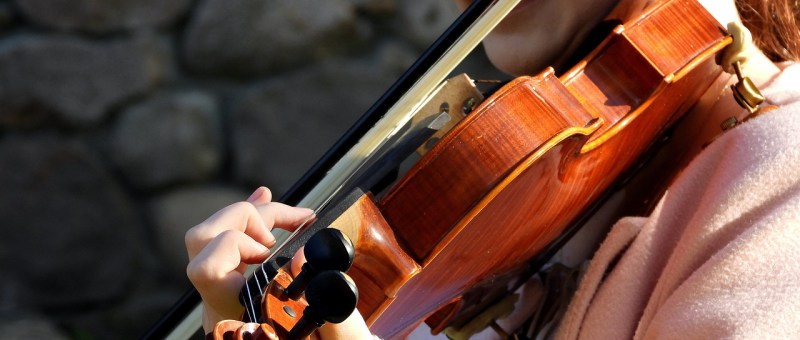

Cultural Capital: How Does Your Culture Benefit You

Imagine you are interviewing two candidates for a job.

They are equally qualified for the job, have the same work experience, and were both compelling in their interviews.

But one went to Harvard, is proficient in three languages, and was dressed in the finest clothes.

The other went to a state school, had no language proficiency, and was dressed well enough but his clothing was not quality.

Even though neither language proficiency nor wardrobe matters for this job, who would you be more likely to choose for the role?

Last week, we talked about social capital – i.e. networking amongst similar groups of people, either of the same social status, across socioeconomic groups, or through shared characteristics.

Similarly, cultural capital can either help an individual succeed in society…or if you have none, it can sometimes stand in the way of success.

Let’s take a closer look at what cultural capital is and how it works.

Cultural Capital

Cultural capital is often defined as “the social assets of a person.”

It refers to the cultural knowledge, skills, and experiences that a person possesses, which can be exploited to gain social status and power. 

Think one’s education, language proficiency or speech patterns, artistic or musical abilities, dress, mannerisms, knowledge of literature, history, and social norms.

All of these characteristics are part of a person’s cultural capital, and they can provide opportunities for some that wouldn’t be open to others.

History of the Concept

The concept of cultural capital was developed by French sociologist Pierre Bourdieu, who argued that cultural capital can be used to reproduce social inequality. 

In his view, those who possess cultural capital are more likely to succeed in society because they are better equipped to navigate social situations and gain access to valuable resources such as education, jobs, and social connections.

In fact, Bordieu believed:

“cultural inheritance and personal biography attribute to individual success more than intelligence or talent.” 

Cultural capital can be acquired through formal education or through exposure to various cultural experiences throughout one’s life…or it can be convincingly faked, as con artists like Anna “Delvey” Sorokin have demonstrated.

Sorokin famously conned her way into high society New York, stealing upwards of $200,000 from the friends she made and from banks.

How?

She knew the value of cultural capital, and she played the part well by convincing her social circle of her style, tastes, and intellect.

Next week, we’ll talk more about how cultural and social capital work together in different cultures around the world.

I am a Third Culture Kid: Here’s What I’ve Learned

Third Culture Kids grow up in more than one culture.

Like Barack Obama or any other child who wasn’t raised in their parents’ homeland, I was expatriated and embedded in a foreign culture from a young age and learned how to adapt.

In fact, I grew up in three cultures.

My family was Swiss. At home, we had Swiss behaviors and traditions.

My school was French. I learned the French language, learned about French history and geography, and befriended my French peers.

My surroundings were African. The market, the neighborhood, the people, the culture – the reality of life all around me was that of the Mossi tribe.

I learned how to alter my body language and my behavior. Even my sense of humor differed depending on the audience.

This is what a TCK learns early on, which many only learn later in life:

Adapting is a necessity across cultures.

Perspective and Behavior

TCKs are in a specific cultural group all their own.

They are in a unique position where they are made to value various cultures, placing relatively equal importance on the behaviors and norms of them all.

The “rights” and “wrongs” that are culture-based and learned through primary socialization vary, and so the TCK learns that hardline views differ from group to group.

This allows some flexibility when navigating contradicting norms and values of the cultures into which the TCK is placed.

In this way, TCKs develop specific interpersonal behavior and standards of perspective that a child raised in a single culture does not, as they are not so exposed to opposing worldviews. 

A TCK’s lifestyle is different. Their communication is different, not only in its multilingual nature, but in its style, nonverbal and otherwise.

The complexity of their firsthand experience with multiple cultures produces in them distinct characteristics that enable their positioning as the perfect zookeepers.

Here’s why.

Zookeepers Know Different Species

Due to their knowledge of and relationship with multiple “species” in the “zoo,” TCKs have developed a natural understanding of various perspectives.

They can see through the eyes of the elephant, the eyes of the penguin, the eyes of the giraffe.

They can even see through YOUR eyes: the eyes of the monkey.

While those who have grown up in one culture develop firm values and norms rooted in that single culture, this can often hinder the acceptance of contradicting values and norms.

Those growing up in single cultures often view other perspectives as wrong, rude, forbidden, or even illegal.

Instead of seeing the whole picture and trying to understand the rationale behind another culture’s beliefs, their perspective becomes emotional, biased, and they tend to stonewall understanding.

TCKs, on the other hand, have learned how to monitor emotions about differing perspectives.

They are more adept at registering social cues and norms and more practiced at cultural sensitivity.

Just as they switch fluidly from one language to the next, they are able to fluidly adapt to behaviors of one culture or another.

To them, it is a way of life.

And this natural empathy allows them to be more understanding of YOU, the monkey, as you have “monkey moments” in a foreign culture.

In this way, they can help serve as a patient teacher between the two worlds, if you should be so lucky to secure their friendship.