
3, 2, 1…New Year’s Traditions From Around the World, Part III

As the clock strikes midnight and the world bids farewell to one year, diverse cultures welcome the new with unique traditions, each created by symbolism and fun. 

In Part I, we learned about “First Footing” in Scotland.

In Part II, we discovered the polka-dotted Philippines.

And this year, we’ll explore Greece, Brazil, and Colombia, where we’ll find that the global celebration of New Year’s Eve traditions continues to weave its tapestry of hope, luck, and the shared human desire for a brighter tomorrow.

Smashing Pomegranates in Greece
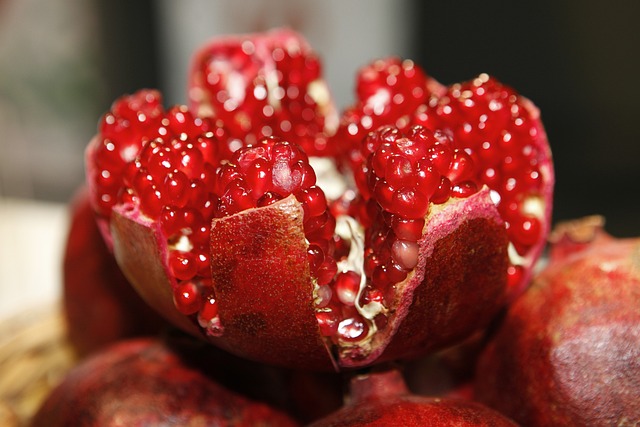
The Greeks engage in Podariko, a New Year’s custom involving pomegranates, seen as symbols of luck, prosperity, and fertility.

Before midnight on New Year’s Eve, households hang pomegranates on their doors, and just before midnight, lights are turned off.

A chosen individual reenters the house with the right foot first, bringing good fortune. 

Subsequently, another person smashes the pomegranate against the door, and the more seeds, the better – more seeds symbolize increased luck for the coming year.

Seven Wishes/Seven Waves in Brazil

Keep in mind that New Year’s is during Brazil’s summertime.

So, Brazilians often celebrate a beachy New Year’s Eve.

And in order to guarantee a successful year, immediately after midnight, people jump seven waves while making seven wishes.

Rooted in homage to Yemanja, the goddess of water, the tradition involves wearing all white, symbolizing purity, before taking the plunge into the waves.

Empty Suitcases in Colombia
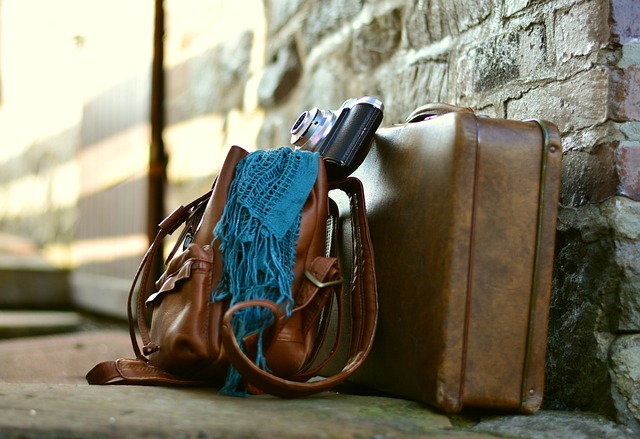
Calling all globetrotters!

A favorite tradition among travel enthusiasts in Colombia involves running around the neighborhood with an empty suitcase, symbolizing a desire for numerous trips in the coming year.

If you also want to divine love or prosperity in your new year, choose your underwear wisely.

Wearing red underwear is believed to attract love, and many embrace this practice to welcome romance into their lives.

Yellow underwear, considered to possess “magical powers,” is worn to invite economic wealth and prosperity.

Maybe you’re greedy and want both.

You might consider wearing two pairs of underwear.

Wherever you’re celebrating, ring in the new year with some of these interesting New Year’s traditions and declare yourself a global citizen!

3, 2, 1…New Year’s Traditions From Around the World, Part II

Goodbye 2022, and hello 2023 – let’s celebrate the new year around the world!

Last year, we talked about New Year’s traditions from Scotland, Spain, and Japan.

This year, we’re heading to the Philippines, Ecuador, and American Samoa to learn of their unique traditions and customs.

Polka Dots in the Philippines

If polka dots are your favorite fashion trend, then the Philippines is where you should ring in the new year.

In the Philippines, where round things represent prosperity, polka dots signify money and fortune.

Needless to say, the fashion of the new year is polka dots, so dress in your finest.

Continuing in this concept, you’ll likely be eating round-shaped fruits as well, which are the centerpiece of the Media Noche (Spanish for “midnight”) – the tradition of a lavish midnight feast, inherited from the Spaniards who once colonized the Philippines.

Burning Effigies in Ecuador

Who wants to burn last year to the ground?

If that’s how you feel, celebrate the new year in Ecuador, where a masked dummy known as the año viejo is made to symbolize the misfortunes of the past year.

At midnight, the sawdust-and-paper effigies are burnt to ashes in the hopes that last year’s misfortunes will disappear in the new year.

Often, the figures are wearing masks of politicians, sports or film stars, cartoon figures, superheroes, animals, and more.

Two-in-One New Year in the South Pacific

Located in the South Pacific Ocean, the last inhabited place on earth to celebrate the New Year is the island of Tutuila in the America Samoa.

The remote tropical island sees only 34,000 visitors annually, and its primary city of Pago Pago is home to fewer than 10,000 people.

Samoan families who have immigrated to other countries often return home to celebrate in homes dressed with flowers and colored papers.

The celebration involves gift-giving, as well as traditional dancing and food.

Its neighboring island of Tonga lies 550 miles away and, lying on the other end of the international dateline, is one of the first countries to ring in the new year. 

So, you have a chance to hop on an 18-minute flight from Tonga to Tutuila to ring in the new year twice!

3, 2, 1….New Year’s Traditions From Around the World

As we bid farewell to 2021 and greet the new year, let’s count down these New Year’s traditions from around the world.

You might just want to adopt some to give yourself a leg up in 2022.

Scotland: First Footing

In Scottish culture, New Year’s Eve is such an important holiday that it has a special name: Hogmanay.

Hogmanay is believed to come from the French, “hoginane,” which means “gala day.”

One of the most interesting Hogmanay traditions is called “first footing.”

If you hope to have good luck in the new year, then you want the first person to cross your home’s threshold after midnight to be a dark-haired man. 

This concept originates from the Viking era when an ax-wielding light-haired man appearing on your doorstep generally meant pillaging.

Thus, the opposing dark-haired man means good fortune – especially if they come bearing symbolic gifts of salt, shortbread, coal, and, of course, Scottish whisky.

Spain: Twelve Lucky Grapes

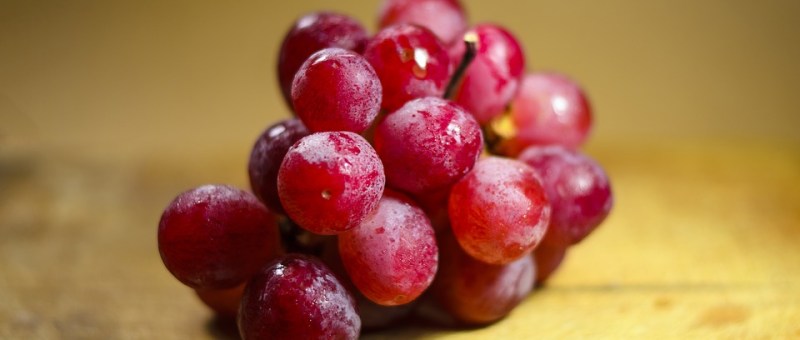
If you happen to be in Spain (or various Latin American countries) on New Year’s Eve, you’ll likely participate in “las doce uvas de la suerte” (“the twelve lucky grapes”).

This holiday tradition involves eating a dozen grapes, one for each month of the year, at the stroke of midnight. 

The tradition dates back to the 19th century and is based in commercialism.

With the aim to sell more grapes at the year’s end, Alicante vineyards created and promoted the ritual.

The tradition has since acquired rules: you must eat a grape at each toll of the clock, allowing you about a second to consume each of them. 

Those who finish all twelve grapes by the time the tolls end (no cheating!) will have good luck in the new year…if they don’t choke.

Japan: Year-Crossing Noodles

As 2021 turns to 2022, get your slurp on in Japan with toshikoshi soba.

Meaning “year-crossing noodles,” the custom involves eating a bowl of this special soba noodle in the new year in the hopes to enjoy a long and healthy life.

The length of the noodle and the resilient buckwheat plant used to make it represent these ideals.

The softer noodle is also easier to break, symbolizing “breaking off the old year” and parting with its troubles.

The tradition dates back centuries to the Kamakura period, where a Buddhist temple gave out soba to the poor on New Year’s, a concept that later turned into a ritual all over Japan.

Whatever traditions you choose to celebrate on New Year’s, I wish you good fortune and health in 2022!

Happy New Year!