
Sister Cities and the Arts: How Cultural Partnerships Inspire Creativity

One of the most joyful aspects of Sister Cities is their partnership in championing cultural expression through artistic exchanges.

These global partnerships celebrate local traditions, foster creativity, and bring communities together in unforgettable ways. 

From slow food in Portland and Bologna to mural exchanges between Chicago and Casablanca, these collaborations highlight the power of international cultural diplomacy.

Portland, Oregon & Bologna, Italy: A Love for “Slow” Food

Portland and Bologna share a deep passion for food culture

Bologna has earned its nickname “La Grassa” (The Fat) for its indulgent cuisine, while Portland has carved out its own identity with a thriving Northwest-inspired food scene. 

In both cities, meals are more than just sustenance – they’re a chance to slow down, savor, and connect. 

Whether strolling through Portland’s bustling Farmers Market or Bologna’s Mercato della Terra, you’ll find a shared appreciation for fresh, locally sourced ingredients. 

And, of course, great food requires great drinks to match. 

Bologna and Portland both take their beverages seriously – Italy has been perfecting wine for centuries, while the Portland region has gained international recognition for its Pinot Noir. 

And while Portland’s craft beer culture is well known, Bologna also embraces the art of brewing, even hosting the annual “Heretical Brewers Fest” each spring.

These loves come together through events celebrating each other’s cuisine, like Sagra in Portland which serves up lasagna, festive music, and a silent auction with Italian goodies.

Chicago, USA & Casablanca, Morocco: A Street Art Connection

Chicago and Casablanca have been sister cities for decades and share a love of public art.

In 2018, they marked 35 years of their sister city relationship with a mural art exchange, strengthening cultural ties between the two cities. 

The project featured Chicago-based muralist Sam Kirk and Casablanca artist Abedellatif Farhate, known as “Kalamour.”

Kirk traveled to Casablanca to create a mural during the city’s CasaMouja Festival, becoming the first female artist to participate. 

She also led an art workshop for local students. 

In return, Kalamour visited Chicago to install a mural as part of WAC’s public art initiative, which has transformed the city’s South Loop with over 60 large-scale artworks. 

The pair also share a digital art museum, known as STEAMuseum, created through a collaboration between high school students from Chicago and Casablanca, using virtual tools to explore science, technology, engineering, and art. 

Launched in 2016, it fosters cross-cultural understanding through digital diplomacy and provides a unique, interactive space for a new generation of digital learners.

Both of these collaborations show that sister city relationships aren’t just boring ol’ diplomacy – they’re about bringing cultures to life in the most dynamic ways. 

So next time your city hosts an international arts event, check to see if it’s part of a sister city exchange. You might just find you share more than a simple bond; you share culture.
Sister Cities: Global Diplomacy in the Best of Times and the Worst of Times

Ever driven by a sign that says your city is “sisters” with some far-flung place like Timbuktu and thought to yourself, “Really? How did that happen?” 

Well, in the US, it’s a tale as old as…1956. 

While we covered how Sister Cities were born out of World War II, the US program was launched by President Dwight D. Eisenhower’s “People-to-People” conference in 1956. 

Ike, clearly ahead of his time, envisioned world peace not through big speeches or flashy treaties, but through ordinary people connecting across borders. 

Thus, Sister Cities International (SCI) was created, a nonprofit that has since grown to link over 500 US cities with more than 2,100 global counterparts. 

It’s like an international club but with trade delegations, cultural festivals, and sometimes awkward exchanges of ceremonial plaques.

Sister Cities in the Best of Times

You might be wondering, “What do Sister Cities actually do?

Great question. 

These partnerships aren’t just symbolic – they’re active, and they make a real impact. 

Each Sister City relationship is unique, but here are the four main flavors of collaboration:

1. Arts and Culture

Exchanging cultural expression – such as music, art, or festivals – is a cornerstone of Sister Cities. 

Communities share in each other’s traditions, encouraging appreciation of other cultures.

2. Business and Trade

Economic collaboration between Sister Cities facilitates everything from business exchanges to trade missions. 

The aim is to grow both regions by tapping into each other’s economic strengths and resources.

3. Community Development

Sister cities are all about problem-solving.

They look toward innovative solutions to issues like healthcare and sustainability. 

Providing the other with expertise, resources, or support, Sister Cities find solutions to each other’s problems – just like any sister would.

4. Youth and Education

Youth programs and educational exchanges contribute to the energy of Sister City relationships.

These initiatives give young people the chance to learn about other cultures, develop leadership skills, and build international friendships on the other side of the world.

Sister Cities in the Worst of Times

If 2020 taught us anything, it’s that in the worst of times, people find ways to step up – even across international borders. 

Sister Cities provided aid in crisis. And they played a quiet but impactful role during a year that tested everyone. 

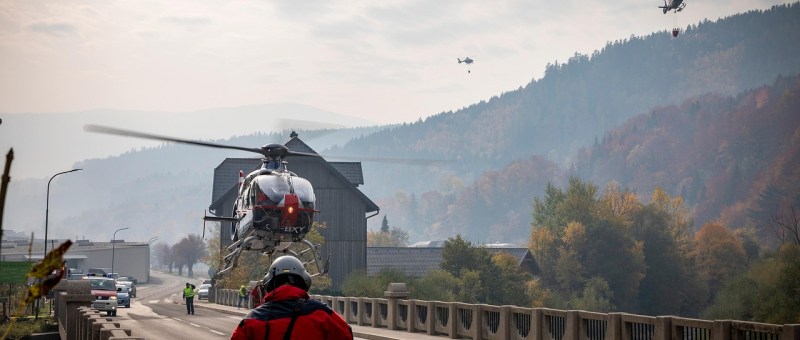
When wildfires ravaged Oregon, firefighters from Guanajuato, Mexico, flew to their Sister City, Ashland, to lend a hand. 

Firefighters from Querétaro did the same for Bakersfield, California. 

And during the height of the coronavirus pandemic, the concept of “mask diplomacy” came to life. 

Hanam City, South Korea, sent masks to Little Rock, Arkansas; Naka, Japan, supported Oak Ridge, Tennessee; and cities in China, like Harbin and Changsha, provided aid to Anchorage, Alaska, and Annapolis, Maryland.

This wasn’t a one-way street. 

Pittsburgh, Pennsylvania, donated masks to Wuhan, China, at the pandemic’s onset, and Phoenix, Arizona, funded a new kindergarten for Chengdu, China, after the devastating 2008 earthquake. 

These actions underscore the unique ability of Sister Cities to foster goodwill and humanitarian support, even when national-level relationships are strained.

The Eisenhower Effect

When Eisenhower pitched this idea, he probably didn’t imagine mayors swapping hats or communities hosting dumpling-making contests…or the pandemic. 

But that’s the beauty of Sister Cities – they’re living proof that diplomacy can be done with a smile.

In a world that sometimes feels more divided than ever, these partnerships remind us that peace doesn’t have to come in the form of grand gestures. 

Sometimes, it’s just about showing up. One city, one connection, one laughably oversized welcome sign at a time.

Practicing Empathy: “How Would I Feel If…?”

Slipping into another’s skin comes easier to some than others.

Multicultural environments prepare those who grow up in them to imagine how a person from a different background thinks and feels, imagine another’s experience in this world.

In that person’s experience, multiple worlds exist, so slipping fluidly from one perspective and reality to another is often more familiar; it comes naturally.

But for those of us who live in a monocultural environment – that is a single, homogeneous culture – the change in perspective is not innate.

Despite having no experience or natural instinct to shift perspectives, there is a simple way to practice.

Ask The Question: How Would I Feel If…?

A Walmart CEO is heading up a branch in Germany.

He digs his feet in, declaring English the company language there and forcing his German staff to communicate only in English. He refuses to learn a lick of German.

If this Walmart CEO had taken a moment to ask himself, “How would I feel if the tables were turned?” he might experience a shift in perspective that would reverse this decision.

If he had imagined for a moment a German CEO at BMW in New York forcing his employees to speak German, declaring it the official language of BMW, he might have seen how flat-footed such a decision is.

How would American employees react? How would YOU react?

Asking the simple question, “How would I feel if a foreigner was doing this in my culture/country?” allows the shift in perspective you need to see your own obvious cultural blunders (i.e. “monkey moments“).

You can also take this view when accommodating foreigners in your own country.

For instance, if you have a visiting colleague from Japan and you know something of the Japanese culture, you probably understand that physical contact – and especially touching of the face – is considered intimate and taboo in Japanese culture.

Although it’s part of your own culture and this visitor is in your country, you might consider, “How would I feel…?” And instead of going in for a hug, a kiss on the cheek, or even a handshake, as are customary greetings in many cultures, you might offer your visiting colleague a bow. Doing so is respectful and would make this colleague that much more comfortable and at home in your country.

While your colleague may try to adapt to their host country and greet you as is customary in your culture, they will likely appreciate the empathetic gesture that you’ve extended.

Tommy Thompson & Krushchev

A little understanding and shoe-shifting go a long way in cross-cultural relations.

In politics, you might call it diplomacy, which is defined as:

“the art of dealing with people in a sensitive and effective way.”

An example of this by Psychologist J. E. Sherman in Psychology Today illustrates a rather extreme example of how shifting perspectives can truly facilitate cross-cultural relations – and even save the world from war.

Sherman explains that missiles had been installed by the Soviets 225 miles off the Florida coast in Cuba during the Cold War.

President Kennedy had to show a strong front. He was leaning toward an airstrike, which would, of course, have escalated the situation, but he thought he was boxed in.

However, level-headed senior foreign service officer Tommy Thompson offered some keen advice.

Having lived with Soviet Premier Khrushchev, Thompson could adopt his perspective, and he convinced Kennedy to go for a softer front: to make Khrushchev an offer that there would be no U.S. retaliation if the Soviets pulled out.

Of course, we all know the result: Khrushchev took the offer, and the world was saved from nuclear war.

Sherman writes:

“Thompson, a competent shoe-shifter put himself in Khrushchev’s shoes. He recognized that Khrushchev wasn’t expecting the US to find out about the missiles so early and hadn’t foreseen the potential for direct confrontation. He would be looking for a way to save face, to claim that he had saved Cuba from attack.”

You, too, can be a competent shoe-shifter like Tommy Thompson.

All it takes is to ask yourself what your own feelings/reactions might be if the shoe was on the other foot.

The conscious process of shoe-shifting allows you to delve into thoughts, emotions, and behaviors in another’s perspective.

In the end, while practicing empathy and active tolerance, you gain insight into individuals, differing perspectives, and foreign cultures.