Christmas Around the World: Interesting Cultural Christmas Characters & Traditions, PART III

The joy and tradition of Christmas unfold in diverse ways around the world. 

Beyond the familiar scenes of snowy landscapes and decorated trees, unique customs tell a tale of culture, history, and the human spirit. 

In this journey across continents, we explore not only the warmth of family gatherings and festive feasts but also some extraordinary practices that add a distinctive flair to the global celebration of Christmas.

Festive Fistfights in Peru

In Santo Tomás, Peru, Christmas Day involves an unconventional event known as Takanakuy, meaning “to strike” in Quechua.

Families settle disputes through organized fistfights, a tradition dating back to the 1600s, born out of conflicts arising from conquistadors taking over indigenous land.

After announcing their grievances, participants engage in controlled fights where hitting is not allowed on the ground, and a referee oversees fairness.

The losers publicly apologize, and both parties reconcile in the town square, embracing to symbolize the end of the dispute.

Despite resistance from the Catholic Church and urban dwellers, Takanakuy serves as a practical alternative to lengthy court proceedings.

Rollerskates in Venezuela

In Caracas, Venezuela, the period between December 16 and 24 transforms the streets into a unique spectacle of roller skating.

Roads are closed, allowing people to skate freely to the early morning Christmas mass in a vibrant and joyful prelude to the festive season.

In a playful tradition, children tie strings to their big toes, dangling them out of windows for skaters to tug on during their journey.

Burning the Devil in Guatemala

Guatemalans celebrate La Quema del Diablo, the Burning of the Devil, on December 7, the eve of the Feast of the Immaculate Conception.

Since the 17th century, this ritual involves burning an effigy of the devil to cleanse homes of misfortunes from the past year.

Communities gather for bonfires and devil-burning ceremonies, with revelers donning devil disguises and vendors selling devil horns and firecrackers.

The event concludes with families enjoying traditional donuts (buñuelos) and warm fruit punch, symbolizing a fresh start and the triumph of light over darkness.

Christmas is a celebration with diverse traditions that reflect the unique history and spirit of each culture. From festive fistfights to rollerblading rituals, these customs remind us of the joy of togetherness and the magic of the holiday season.
10 Cultural Universals: How Does Geography Impact Culture?

Last week, we glanced at the 10 Cultural Universals. For the next several weeks, we’ll take a closer look at each of them, in turn. Let’s start with geography.

Let me paint a picture:

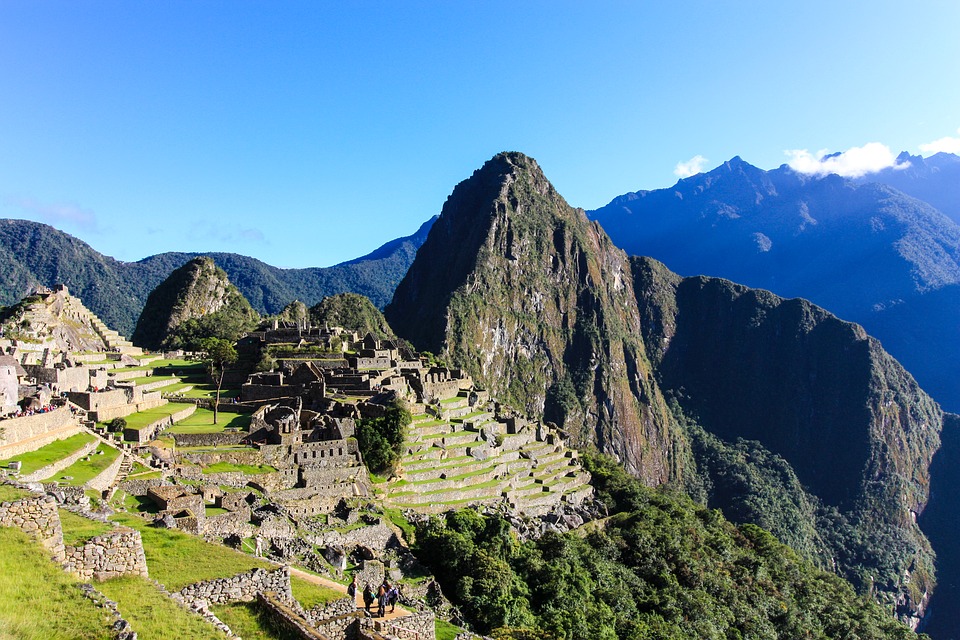
It’s the 16th century. The astounding Andean Mountains serve as the backdrop to the epic uprising of the Inca culture – a culture that sprung up in the highlands of Peru and thrived for three centuries.

Surprisingly, for being such an important empire – and perhaps the largest in history – technology isn’t so advanced as to include wheeled vehicles, partially due to the terrain and lack of draft animals to pull plows and wagons.

blog36

And yet, still, the Incas create enormous architectural structures and road networks that stand to this day. Their diet is primarily vegetarian, and they produce agricultural innovations – like warehouses to conserve grain – that aid their culture’s survival in this difficult environment. The government, too, does their job to drive the empire to greatness, enforcing labor management and organization strategies that are crucial to their success.

Of course, clothing in the highland is warmer and often made out of wool. The textiles are woven or knitted and are never tailored, held together, instead, by metal pins. Clothing styles indicate the status of the individual, with commoners wearing garments of coarser textiles.

The bodies of the Inca people, as well, have physically adapted to the high altitude, with an increase in red blood cell count and lung capacity.

As you can tell, geography plays a major hand in directing the Inca’s cultural formation and development. All of this is studied in cultural geography, one of the 10 Cultural Universals.

Cultural Geography

Defined as “The study of the relationship between culture and place,” in Dartmouth’s words, cultural geography:

“Examines the cultural values, practices, discursive and material expressions and artefacts of people, the cultural diversity and plurality of society, and how cultures are distributed over space, how places and identities are produced, how people make sense of places and build senses of place, and how people produce and communicate knowledge and meaning.”

Rooted in Friedrich Ratzel’s anthropogeography, the study of the relationship of a culture with its natural environment began in the early 20th century, with the intent to understand social organizations and cultural practices in relation to place and environment.

This includes such topics as the isolation or interconnectedness of a culture, clothing, traditions, government, economy, religion, etc., all with respect to its geography.

Cultural geography looks at how groups adapt to their environment, but also how they shape the landscape, through architecture, agriculture, and engineering.

New Cultural Geography

In the late 1980s, ‘new cultural geography’ challenged the above approach by expanding these areas of research. New cultural geography looks more broadly at the many ways in which culture impacts places and everyday life.

“Othering,” imperialism, colonialism, religion, and nationalism are studied to determine how these practices impact the locale, including various groups’ sense of rejection or acceptance in society.

While the study of culture and geography is as ever-changing as a landscape, one thing’s certain: culture and geography are indelibly interconnected.